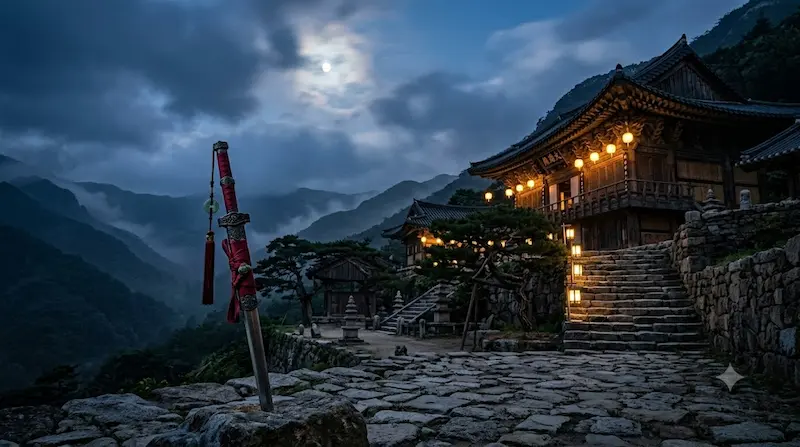
This Alchemy of Souls complete guide covers everything an international viewer needs to know about tvN’s 2022-2023 fantasy phenomenon — both seasons, the full cast, the magic system, the famous Mu-deok recast, and whether the show is still worth starting in 2026. The series ran for a combined 30 episodes between June 2022 and January 2023, became Netflix’s biggest non-English fantasy series of its release window, and is still one of the most-searched Korean fantasy dramas globally.
This Alchemy of Souls complete guide is built for two kinds of readers: the international viewer who has heard the title for three years and finally wants to know if it lives up to the hype, and the returning fan who needs a clean reference for Daeho’s tangled magic system before a rewatch. Choco Papa watched the original run live on tvN in 2022 and is writing this from a 59-year-old Korean perspective with no spoiler punches pulled.
Why Alchemy of Souls Still Matters in 2026
Korean fantasy drama before 2022 leaned heavily on light romance with magical accessories. Alchemy of Souls did something different. It built a fictional country called Daeho with its own political system, magical institutions, and historical timeline, then told a story that actually required all of that worldbuilding to function. The plot does not work without Songrim. Songrim does not work without the soul shifting taboo. The taboo does not work without Jinyowon. Every piece locks into the next.
That structural ambition is why the show outlasted its initial run. In 2026, three and a half years after Season 1 premiered, search interest for the title is still climbing in English-speaking markets — partly because Netflix keeps surfacing it, and partly because there is genuinely no Korean fantasy drama since that has matched its scope.
A Quick Look at the Hong Sisters’ Track Record
Alchemy of Souls was written by Hong Jung-eun and Hong Mi-ran, the writing duo known to Korean audiences simply as the Hong Sisters. Their previous credits include My Girlfriend Is a Gumiho, The Master’s Sun, Hotel del Luna, and a string of supernatural romances that essentially defined the genre’s shape in Korea. Alchemy of Souls is their first attempt at full epic fantasy rather than supernatural romance, and it is the project that proved they could scale up.
International viewers unfamiliar with the Hong Sisters often miss that the show’s mix of comedy, romance, action, and tragedy is not a tonal accident. That blend is their signature. It is also why some viewers bounce off the early episodes — the lighter Season 1 opening tone is misleading about how dark the back half gets.
Alchemy of Souls Complete Guide to the Two Seasons
The most common confusion about Alchemy of Souls is the season structure. The show is one continuous story told in two production blocks, but the second block is officially titled Light and Shadow rather than Season 2. tvN’s marketing has been inconsistent about whether to call it Season 2 or Part 2. Both terms are accurate.
Season 1 — The Original 20-Episode Run
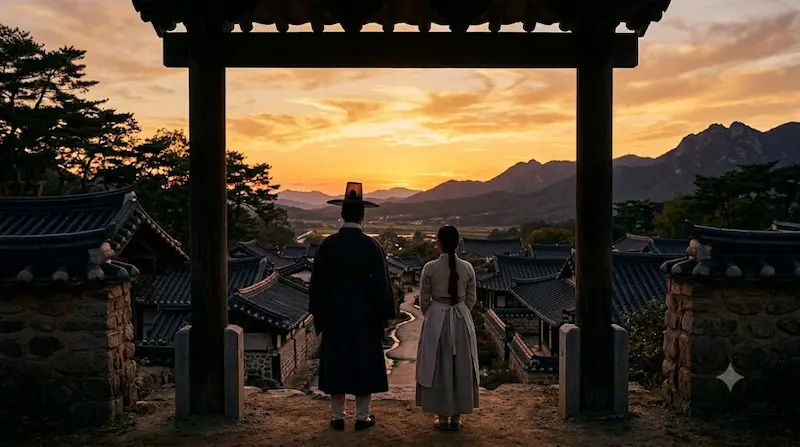
The original season aired from June 18 to August 28, 2022, in tvN’s premium Saturday-Sunday 9:10 PM slot. The 20-episode run averaged around 8% nationwide ratings, with the finale peaking at 9.4%, strong numbers for a fantasy drama. Season 1 establishes Daeho, introduces the four main mage friends, builds the tighter emotional focus.
Light and Shadow — The 10-Episode Sequel
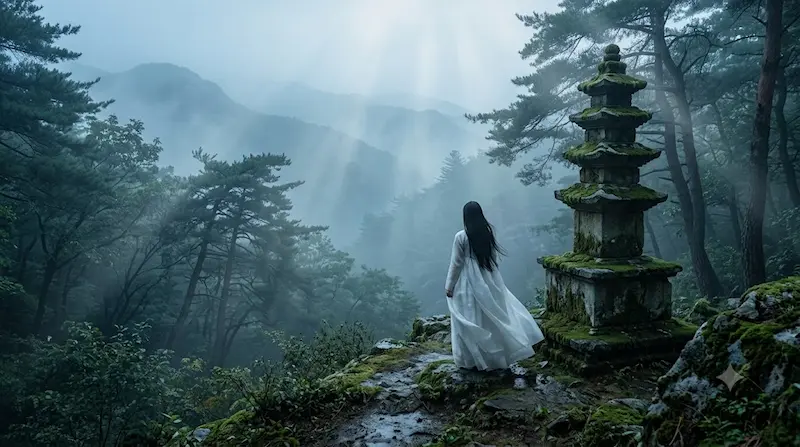
Light and Shadow aired from December 10, 2022 to January 8, 2023, only three and a half months after Season 1 ended. The 10-episode run picks up three years after Season 1’s finale and resolves the storylines the first season deliberately left open. Ratings averaged around 6% nationwide — lower than Season 1, but still respectable for the holiday season slot.
Light and Shadow is shorter, tighter, and significantly darker than Season 1. It is also where the show’s worldbuilding pays off in ways the lighter early episodes only hinted at. Skipping Light and Shadow is not an option; Season 1 alone is an incomplete story.
The Cast — Who’s Who in Daeho
The Four Mage Friends (Jang Uk, Park Dang-gu, Seo Yul, and the Crown Prince)
Lee Jae-wook plays Jang Uk, the wayward son of Daeho’s most powerful mage family. Lee was a rising star when cast, and the role made him an A-lister. His Season 2 performance, in particular, is the spine the entire sequel is built on.
Yoo In-soo plays Park Dang-gu, Songrim’s heir and Jang Uk’s closest friend. Yoo’s comic timing in Season 1 transitions into genuine emotional weight in Season 2.
Hwang Minhyun, the former Wanna One member, plays Seo Yul, the quiet third member of the mage friend group whose hidden feelings drive several of the series’ best scenes. Hwang’s restrained performance surprised viewers who only knew him from his idol career.
Shin Seung-ho plays Crown Prince Go Won, whose arc from minor royal figure to genuine threat is one of the show’s quieter accomplishments.
The Women Who Change Everything (Mu-deok, Jin Bu-yeon, Heo Yun-ok)
Jung So-min plays Mu-deok in Season 1 — a mysterious servant who is not what she appears to be. Jung’s performance is the reason Season 1 works at all; she carries the show’s emotional core through 20 episodes.
Go Youn-jung plays Jin Bu-yeon in Light and Shadow. This is where the famous recast question comes in, addressed in detail below.
Hong Seo-hee plays Heo Yun-ok, Jang Uk’s childhood friend and Park Dang-gu’s eventual partner. The role is small in Season 1 but becomes one of Light and Shadow’s emotional anchors.
The Adults — Songrim, Jin Family, and the Royal Court
Yoo Jun-sang plays Park Jin, the head of Songrim and a stand-in father figure for the four young mages. Oh Na-ra plays Kim Do-ju, Park Jin’s right hand at Songrim and one of the show’s quietly funniest characters. Im Cheol-soo plays Jin Mu, whose true role drives the entire conspiracy at the center of both seasons.
Other key adult roles include Jo Jae-yoon as Heo Yeom (Yun-ok’s father and Daeho’s top healer), Park Eun-hye as Jin Ho-gyeong (Jin family matriarch), and Joo Sang-wook as Naksu’s former mentor in flashbacks.
The Magic System Explained — Soul Shifting, Jinyowon, and the Ice Stone
For more on this, see the upcoming Character & World Guides hub. The short version:
What Soul Shifting Actually Does
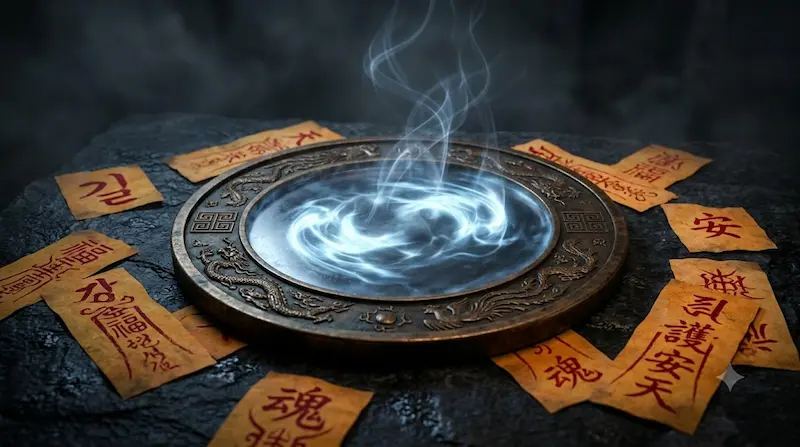
Hwanhyeon — translated as soul shifting — is a forbidden technique that transfers a living soul into another living body. The original body dies. The transferred soul lives on in the new body but loses access to the original body’s energy reserves, called gi in the show. Soul shifters can be detected because the host body’s eyes turn blue when the new soul activates its full power.
The taboo against soul shifting exists for a practical reason within the world: every soul shifter eventually goes mad or turns to stone, because a human body cannot indefinitely hold a soul that does not belong to it. The drama’s entire plot is set in motion by people who decided to risk that consequence.
Jinyowon and the Sealed Energy
Jinyowon is a sealed vault run by the Jin family. It contains dangerous magical artifacts and concentrated energy that the world is better off without. The Jin family’s role is custodial, not political — they exist to keep Jinyowon sealed. The plot complications begin when someone wants what is inside.
The Ice Stone and Why It Breaks the World
The ice stone (bing-gi-reul) is a piece of concentrated cosmic energy that, when absorbed into a human body, grants nearly limitless magical power. It also slowly kills the host. The ice stone’s whereabouts drive Season 1’s second half, and its consequences drive almost all of Light and Shadow.
Watching Order and Where to Watch
The watching order is simple: Season 1 first (20 episodes), then Light and Shadow (10 episodes), in release order. There are no flashback specials or alternate cuts to worry about.
Internationally, Alchemy of Souls is available on Netflix in most regions. Both seasons are licensed together on Netflix, though they appear as separate entries in the interface. In Korea, the original run is on tvN’s streaming partner platforms.
The full 30-episode run is about 49 hours of viewing. Choco Papa recommends spacing Season 1 across two weeks (10 episodes per week) and watching Light and Shadow in a single weekend block — the sequel’s tighter pacing rewards binge viewing in a way Season 1 does not.
Ratings, Reception, and the Mu-deok Recast Question
Season 1 averaged 7.9% nationwide with a 9.4% finale peak. Light and Shadow averaged 6.1% with a 7.3% finale peak. Both seasons were considered hits by tvN’s standards for the time slot. Globally, the show entered Netflix’s non-English top 10 in over 70 countries during its release windows.
International critical reception was strong but with one persistent complaint: the lead actress change between seasons.
Why the Lead Was Recast for Season 2
The reason Jung So-min did not return as Mu-deok in Light and Shadow is both narrative and practical. Narratively, the character Jin Bu-yeon in Season 2 is not Mu-deok with a new face. She is a different person whose body was previously occupied by Naksu’s soul (the soul that became Mu-deok in Season 1). After Season 1’s finale events, Jin Bu-yeon’s original soul returns to her own body. So the actress change reflects an actual change in who the character is.
Practically, Jung So-min was committed to other projects during the Light and Shadow production window, and the production decided the recast made narrative sense rather than waiting for her schedule to open up.
Go Youn-jung was a relative newcomer when cast as Jin Bu-yeon, and her performance won over most skeptical viewers by the third or fourth episode of Light and Shadow. Whether it fully replaces Jung So-min’s Season 1 presence is the kind of fan debate that has run continuously since the sequel aired.
The Alchemy of Souls complete guide answer is straightforward: the recast is a story choice, not a casting accident. Approach Light and Shadow expecting a different character, not a different actress playing the same character.
Common Questions About Alchemy of Souls
Is Alchemy of Souls worth starting in 2026? Yes, if you have any tolerance for fantasy worldbuilding and patient pacing. The show rewards patience; viewers who quit at episode 4 often miss the point.
Do I have to watch Light and Shadow after Season 1? Yes. Season 1’s ending is deliberately unresolved. Light and Shadow is not optional.
Is there a Season 3? No. Light and Shadow concludes the story. There has been no announcement of further seasons as of January 2026.
Where does Alchemy of Souls rank among Hong Sisters dramas? It is their most ambitious project structurally. Whether it is their best depends on taste — Hotel del Luna fans tend to prefer that show’s tighter emotional focus.
Is the show actually historical? No. Daeho is a fictional country with vaguely Joseon-era aesthetics but no real-world historical analog. The show is pure fantasy.
Why are there so many Korean magical terms? Because the show built its own magic system from East Asian Taoist and shamanic traditions rather than borrowing Western fantasy conventions. The terms feel dense at first but become intuitive by episode 8 or so.
Choco Papa’s Take — Is Alchemy of Souls Worth Starting in 2026?
Honest take from a 59-year-old Korean viewer who watched both seasons live: this is the rare Korean fantasy drama that earns the word “epic.” Most shows that try to build a world this complete run out of script energy by the middle. Alchemy of Souls does not. The plot tightens as it goes, and Light and Shadow in particular pays off setups that were planted twenty-five episodes earlier.

The show works for international viewers because the Hong Sisters wrote it with universal emotional beats — forbidden love, found family, sacrifice, the weight of secrets — built on top of a culturally specific magic system. The cultural specificity is the flavor, not the barrier.
It does not work for everyone. Fast-pacing fans will find Season 1’s first six episodes too leisurely. Those who hate tragic endings will struggle with the back half of both seasons. And anyone hoping for Western-style magic schools and chosen-one structures may find Daeho’s institutional logic frustrating.
What Makes It Worth Your Time
Choco Papa’s recommendation: start Season 1 with the understanding that the show is building something larger than it first appears. Give it through episode 10. If episode 10’s revelations do not hook you, the show is not for you. If they do, you have 20 more excellent episodes ahead and one of the most rewarding fantasy worlds in K-drama history.
Three and a half years on, Alchemy of Souls still holds up. The pacing that felt indulgent in 2022 reads as confidence in 2026. The recast controversy that dominated Light and Shadow’s release week feels minor next to the show’s overall achievement. And the lake scene at the end of Season 1 is still, no exaggeration, one of the best-directed finales tvN has produced in the last decade.
For continued Alchemy of Souls coverage, see the Alchemy of Souls category page which collects all upcoming episode group recaps, the ending explained breakdown, and the magical terms reference guide. Official series information is available on the tvN Alchemy of Souls page and the Netflix series listing. An additional overview can be found in the Alchemy of Souls Wikipedia entry, which is a useful cross-reference.