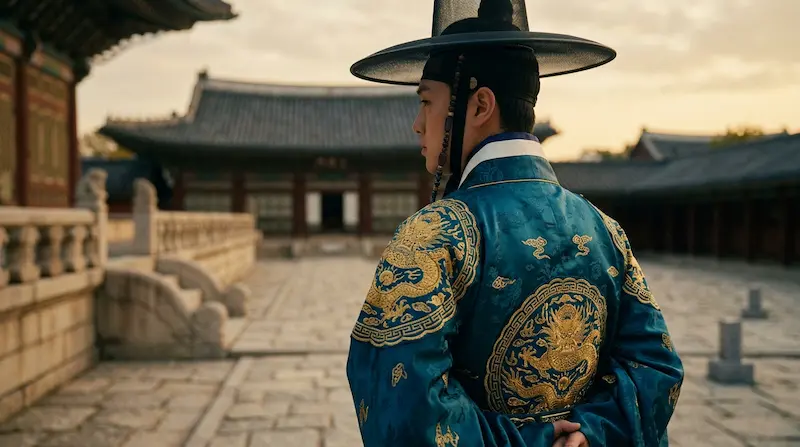
The Byeon Woo-seok cheollik look from MBC’s Perfect Crown did something most K-drama costumes never do. Specifically, it pulled the actor’s wardrobe out of the entertainment section and into national policy debate. Furthermore, it forced museums, palace administrators, and the broader public to revisit a question most people had assumed was settled: what counts as hanbok? Therefore, this guide unpacks every layer of the situation, including the cheollik itself, the gonryongpo that followed in Episode 10, the costume designer’s stated philosophy, and the Gwanghwamun Palace controversy that turned a costume choice into a cultural conversation.
If you arrived here from our Byeon Woo-seok Fashion guide, this article zooms in on the Perfect Crown costumes specifically. However, if you want the broader career style breakdown, that earlier guide remains the master reference.
The Outfit That Sparked a National Hanbok Debate
Most drama costumes get praised, copied, or forgotten. However, the Byeon Woo-seok cheollik did something different. Specifically, it landed in the middle of an active policy debate about Korean palace entry rules.
How a Costume Became News
The conversation started quietly on social media. Then, major outlets including Hankyoreh, Korea Herald, and Korea JoongAng Daily picked up the story within days. Furthermore, the Korea Times ran a full interview with the Perfect Crown costume designer on May 1. As a result, what began as a styling choice for a fictional modern royal became a real-world question about cultural definitions.
Why Episode 10 Intensified Everything
The cheollik debate had been simmering for weeks. However, Episode 10 dropped a second visual bomb when Yi An produced the hidden royal decree and ascended as king. Specifically, the gonryongpo costume that followed gave fans an even more elaborate royal look to dissect. Therefore, the fashion conversation around Perfect Crown effectively doubled overnight.
What Is Cheollik? A Quick Definition
Before diving into the controversy, the garment itself needs context. Specifically, the cheollik is not a modern invention.
Origins and Construction
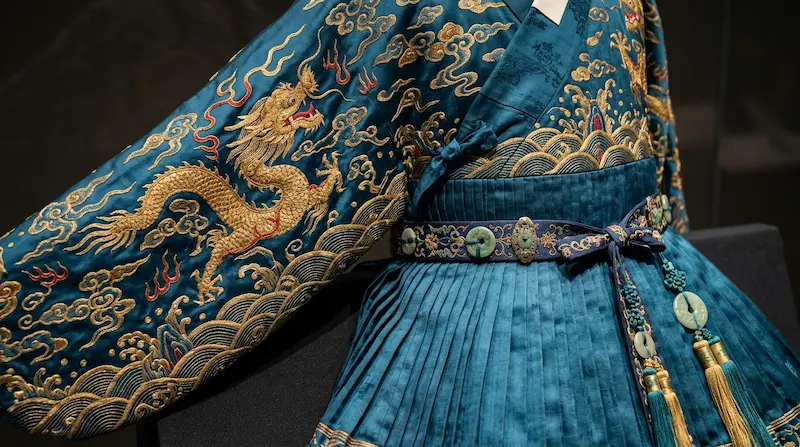
The cheollik (철릭) is a traditional Korean robe historically worn by military officers and royalty during the Goryeo and Joseon dynasties. Furthermore, the garment is defined by a fitted upper bodice sewn to a heavily pleated lower skirt, joined at the waist. Therefore, it sits within the broader hanbok family by structure, even though it differs visually from the more familiar jeogori-and-chima silhouette most people associate with the word “hanbok.”
Why the Form Matters
The pleated skirt allowed mobility for horseback riding and combat. Meanwhile, the fitted bodice signaled rank and authority. Consequently, the cheollik historically carried a dual identity as both functional military wear and ceremonial royal dress. As a result, Perfect Crown’s choice to put Yi An in cheollik was not random. Instead, it deliberately signaled a prince who was both warrior and royal heir.
The Perfect Crown Version
Costume designers reimagined the cheollik in a deep teal blue with gold-thread embroidery. Furthermore, the silhouette was tightened to flatter modern proportions, and ceremonial belts with jade ornaments were added. Therefore, the result reads as historically rooted but visually contemporary, which is exactly the line Perfect Crown’s setting required.
The Gonryongpo: When Yi An Becomes King
Episode 10 introduced a second royal garment that fans immediately compared to the cheollik. However, the two pieces serve very different functions.
What the Gonryongpo Represents
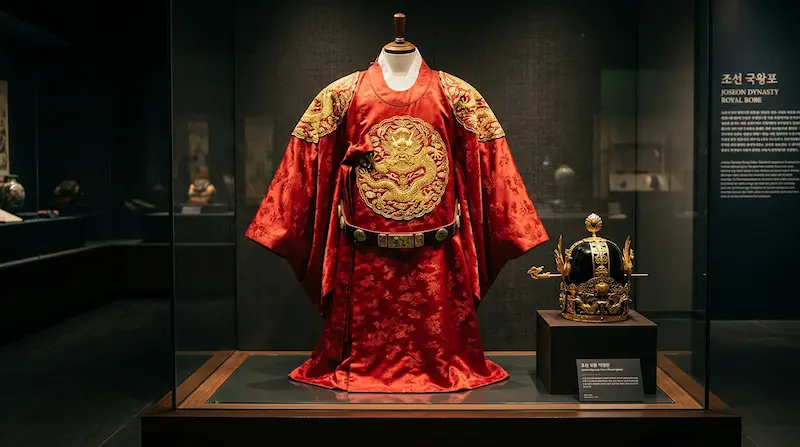
The gonryongpo (곤룡포) is the formal royal robe worn by Korean kings during the Joseon dynasty. Specifically, it features a five-clawed golden dragon embroidered on the chest, shoulders, and back, paired with the ikseon-gwan crown. Therefore, when Yi An appeared in gonryongpo at the end of Episode 10, the costume itself announced the political shift before any dialogue confirmed it.
Color and Symbolism
Perfect Crown’s gonryongpo leans on deep red silk with vivid gold dragon embroidery. Meanwhile, the dragon motif is not decorative but doctrinal. The five-clawed dragon was historically reserved for the king alone, while princes wore four-clawed versions. Consequently, the moment Yi An puts on the five-clawed garment, the show is making a constitutional argument visually.
Cheollik vs Gonryongpo at a Glance
Cheollik signals a warrior-prince with martial heritage. Furthermore, gonryongpo signals a sovereign king with absolute authority. Therefore, Yi An’s costume arc from cheollik to gonryongpo mirrors his political arc from contracted prince to crowned king. As a result, fans who tracked the wardrobe were effectively reading the plot in advance.
The Costume Designer’s Vision: Quiet Luxury in Korean Color
The costume designer gave a detailed Korea Times interview on May 1, 2026. Specifically, the interview reframed the entire fashion conversation around Perfect Crown.
Reimagining Hanbok
According to the designer, Perfect Crown’s wardrobe was built around the concept of “quiet luxury rooted in Korean color.” Furthermore, the deep teal blue used for the cheollik was deliberately chosen to evoke traditional Korean pigments rather than imported palettes. The designer noted that some viewers might read the color as “Tiffany blue,” but emphasized it was a deeply Korean color drawn from historical textile records. Therefore, the choice was a quiet act of cultural reclamation.
Modern Royal Aesthetics
Perfect Crown’s premise required a fictional 21st-century constitutional monarchy. Meanwhile, the costume team had to design royal wear that felt both contemporary and ceremonially valid. Consequently, the cheollik and gonryongpo were retooled with sharper tailoring, refined embroidery density, and color palettes calibrated for high-definition camera work. As a result, every shot of Byeon Woo-seok in royal dress reads as cinematic without sacrificing historical reference.
Co-Star Wardrobe Echoes
IU’s costume arc as Seong Hui-ju runs in dialogue with Yi An’s. Furthermore, her flower-patterned modernized hanbok pieces share the same “quiet luxury” philosophy. Therefore, the couple’s wardrobe forms a unified visual language across the season. Readers tracking IU’s specific looks can find more in our IU Fashion guide.
The Gwanghwamun Palace Controversy Explained
The cheollik debate did not stay confined to fashion blogs. Instead, it triggered a real-world policy conversation about palace entry rules.
Background: The Free Entry Rule
South Korea’s major palaces, including Gwanghwamun, have long offered free entry to visitors wearing hanbok. Furthermore, this policy supports cultural tourism and traditional clothing rental businesses around the palace district. Therefore, the question of what counts as hanbok carries direct economic stakes.
How Perfect Crown Reignited the Debate
After Byeon Woo-seok’s cheollik gained viral attention, visitors began arriving at Gwanghwamun in cheollik-style fusion hanbok and requesting free entry. However, palace administrators have historically excluded cheollik, gonryongpo, and palace guard uniforms from the free-entry definition. Specifically, the official rule limits free entry to garments where the upper jeogori and lower chima or baji are clearly separated. Consequently, fusion pieces with attached upper-and-lower construction fall outside the qualifying definition.
The Public Response
Coverage from Hankyoreh and Korea Herald highlighted the inconsistency. Specifically, critics asked why a historically authentic Korean garment worn by royalty could be excluded from the official hanbok definition while modernized rental pieces qualified. Meanwhile, defenders of the existing rule argued that the policy targets cultural tourism wear rather than ceremonial accuracy. Therefore, the debate became less about fashion and more about who decides what tradition means in 2026.
Why This Matters Beyond the Drama
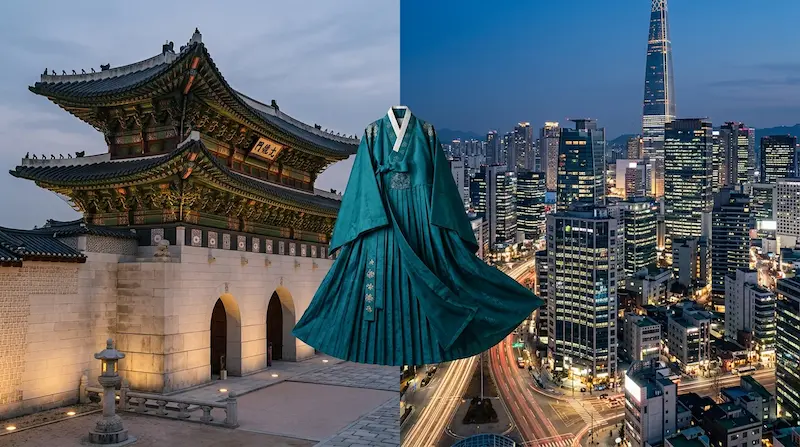
The cheollik debate pushed an academic conversation into mainstream visibility.Costume controversies in K-drama usually fade within a few weeks. However, the Perfect Crown cheollik discussion has structural staying power.
Cultural Definition Stakes
The debate forced palace administrators, cultural ministry officials, and traditional clothing scholars to publicly explain their definitions. Furthermore, those explanations exposed real disagreements within the field. As a result, Perfect Crown effectively pushed an academic conversation into mainstream visibility.
Tourism and Economic Implications
Hanbok rental businesses around Gyeongbokgung and Gwanghwamun watched the debate carefully. Specifically, any expansion of the free-entry definition would reshape inventory decisions for the entire rental district. Therefore, the cheollik question carries direct commercial weight beyond the drama’s runtime.
Soft Power Effects
Perfect Crown is streaming internationally on Disney+. Meanwhile, English-language coverage of the cheollik has appeared in Korea Times, Korea Herald, and Korea JoongAng Daily. Consequently, the debate is no longer a domestic conversation. Instead, global audiences are engaging with a granular Korean cultural question through the lens of one actor’s costume.
Final Thoughts: Fashion as Cultural Conversation
Perfect Crown will eventually finish its run. Furthermore, the wedding night scene, the contract marriage reveal, and the king’s ascent will all settle into the show’s permanent record. However, the Byeon Woo-seok cheollik may outlast the drama itself in cultural memory, because the costume forced a national conversation that the entertainment industry rarely triggers.
The cheollik signals a warrior-prince. Meanwhile, the gonryongpo signals a sovereign king. Therefore, Yi An’s wardrobe is plot itself, not decoration. For viewers who want the wider context, the Perfect Crown Complete Guide covers the full cast and storyline. For the designer’s own words, the Korea Times interview remains the definitive primary source.
Finally, Perfect Crown’s remaining episodes will likely introduce additional royal looks as Yi An consolidates power. Therefore, expect the cheollik conversation to evolve into a broader gonryongpo discussion as the finale approaches. Meanwhile, the rule book at Gwanghwamun has not been rewritten yet, but the pressure is now public.