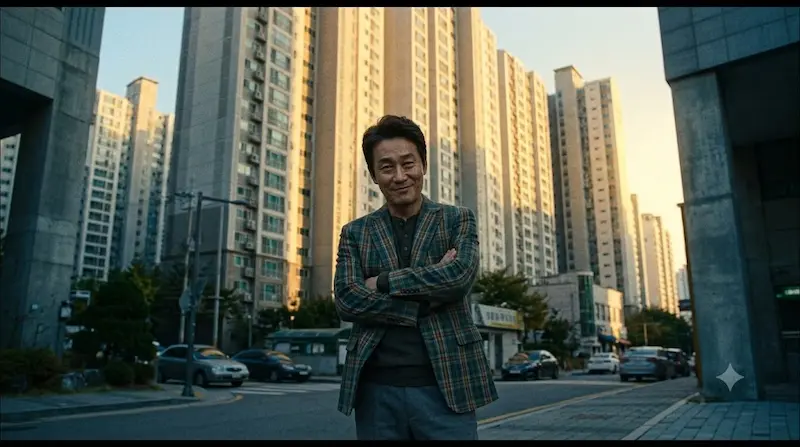
The Apartment Job (아파트) Complete Guide: Ji Sung, 17.8 Billion Won, and the K-Drama Everyone Is Talking About
Choco Papa here. I have been running K-drama recaps for a while now, and I have learned one thing. When a Korean drama debuts at number one on Netflix Korea and crashes into the Global Non-English Top 10 in the same week, you stop what you are doing and pay attention. The Apartment Job (아파트) did exactly that. Ji Sung’s return to leading-man television, aired weekly on JTBC and streamed globally on Netflix, has quietly become one of the most talked-about K-dramas of summer 2026. Two episodes in, and it is already outperforming most Netflix originals in its window. The soundtrack has Ha Hyun-woo of Guckkasten on the lead track. The fashion is trending on Korean style accounts. The filming locations are already being scouted by fan bloggers. And an entire trade association is upset with the show.
Here is everything international viewers — and Korean viewers who missed the premiere weekend — need to know before diving in.
What Is The Apartment Job? Quick Facts
The Apartment Job is a 2026 JTBC Saturday-Sunday drama starring Ji Sung, Ha Yun-kyung, Park Byung-eun, and Moon So-ri. It premiered on July 11, 2026 and runs for 12 episodes, ending August 16, 2026. Netflix simulcasts the drama in over 190 countries with English and Korean subtitles. Director Jo Yong-won and screenwriter Kim Yoon-young lead the production. Episode length runs a full 90 minutes — longer than the typical Korean broadcast drama, which usually clocks in at 60 minutes.
The show blends four genres at once: crime, thriller, mystery, and comedy. On the surface, it looks like a con-man caper about a former gang boss trying to steal money from an apartment building. Beneath that surface, it becomes a story about community, corruption, and the strange things ordinary people accept without asking questions.
The title itself signals the show’s core insight. “Apartment” — 아파트 — is one of the most ordinary words in Korean. More than half of all South Koreans live in one. Every month they receive a management fee bill. Almost no one reads the details. The drama argues that this collective inattention has consequences. And when a former mob boss decides to exploit that inattention, the story becomes both funny and uncomfortable in equal measure.
Global Rankings — Why Everyone Is Watching
The rankings speak louder than any marketing campaign could.
The Apartment Job debuted at number one on Netflix Korea’s Top 10 Series chart in its opening week. It entered Netflix’s Global Non-English TV Top 10 at number 10, earning 1.4 million viewing hours and 1.9 million cumulative views during its first week of availability. For a Korean broadcast drama that only shared two aired episodes internationally, those numbers are exceptional. Most Netflix Korean originals need three to four weeks to reach comparable rankings.
Domestically, the ratings tell the same story. Episode 1 launched at 5.4 percent nationwide (Nielsen Korea). Episode 2 reached 5.8 percent in the Seoul metropolitan area with a real-time peak of 6.5 percent. These numbers made The Apartment Job the highest-rated debut of any Netflix-and-JTBC co-branded drama in the platform’s history. IMDb currently rates the series 6.8 out of 10 with international viewer reviews calling Ji Sung’s performance “phenomenal.”
The Story — More Than a Con-Man Comedy
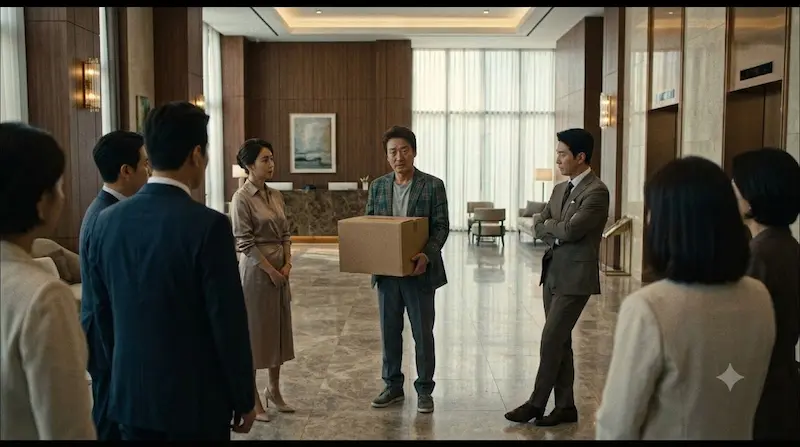
The setup sounds straightforward. Park Hae-gang (Ji Sung) is a former boss of the Oasis Gang, a mid-tier Korean criminal organization. He needs money badly. He learns that Trueview State, a massive luxury apartment complex in Seoul, has accumulated 17.8 billion won — roughly 13 million US dollars — in its long-term repair reserve fund. The fund sits in the complex’s bank account, technically owned by the residents collectively, technically overseen by the residents’ representative council, and in practice guarded by almost no one.
Hae-gang decides to move in, run for president of the residents’ council, and steal the whole thing.
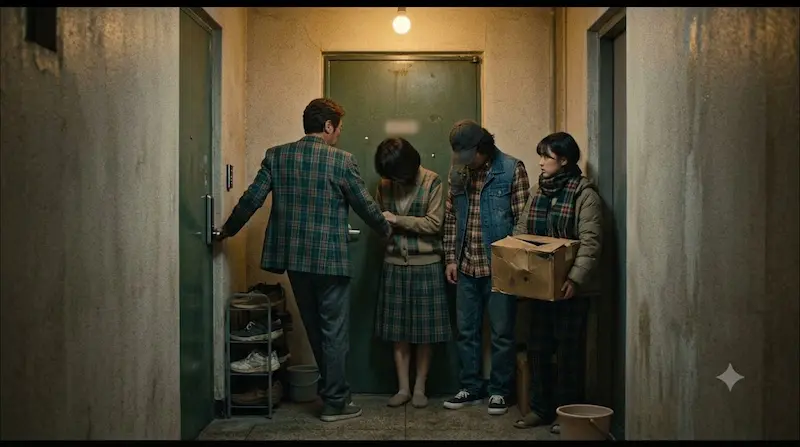
To gain the trust of skeptical upper-middle-class neighbors, he assembles a fake family — a wife who isn’t his wife, a sister-in-law who isn’t related to anyone, and a father figure pulled from his old gang days. The Korean internet has already given this arrangement a new name: “intermittent family” (간헐적 가족), a term that first appeared in reviews of Episode 3. It captures the show’s black comedy heart perfectly.
From Con Job to Something Else
These people are pretending to be relatives so they can steal money together. But something unexpected happens along the way. They start actually caring about each other. Soon after, genuine concern grows for the apartment building and its real residents. By the time Hae-gang realizes what’s happening, the man who set out to loot the community finds himself uncovering deeper corruption than he ever intended to expose.
The show’s tagline reads: “A bad guy stumbles into punching worse guys in the back of the head.” It’s a con-man story that turns, almost against its own will, into a story about civic duty. That is the tension that makes the drama work.
Meet the Cast — The “Believable-Actor” Ensemble
Korean media has already given this cast a nickname: “믿보배” — short for “actors you trust to watch.” It is not marketing exaggeration. This is one of the strongest ensembles assembled for a JTBC drama in years.
Ji Sung as Park Hae-gang
The show’s engine. Ji Sung is a veteran with more than two decades of leading roles, from Kill Me, Heal Me (2015) to Money Flower (2017) to Doctor Lawyer (2022). His return to leading-man television after several years off has been anticipated by Korean audiences for a long time. Park Hae-gang is arguably one of his most demanding roles — a former gangster who is also a con artist, who is also, eventually, a reluctant good guy. Co-star Park Byung-eun told reporters at the press conference that Ji Sung is “in a godly acting territory” and “the calmest, most professional lead I have ever worked with.”
Ha Yun-kyung as Kang Ha-ri
Ha Yun-kyung plays a law school student who partners with Hae-gang for reasons Episode 2 begins to reveal. Her performance has been called “character-devouring” by Korean critics. Viewers may recognize her from Melo Is My Nature and Moving. She is not the sidekick. She is the plan’s brain.
Park Byung-eun as Lee Chung-won
Park Byung-eun plays Lee Chung-won, a construction company CEO — the show’s primary antagonist, and the man who has the most to lose if anyone actually reads the repair fund’s paperwork. Known for My Mister and Through the Darkness, Park Byung-eun brings a specific kind of controlled menace that comedic villains rarely get.
Moon So-ri
Moon So-ri, one of Korea’s most decorated film actors (Oasis, The Handmaiden), makes a rare television appearance here. Her casting alone is a headline in Korean media. The exact contours of her role are being kept quiet by production, but she has been described as pivotal to the corruption plot.
Kim Won-hae as Domabaeng (“Lizard”)
The scene-stealing former apartment manager, whose knowledge of the complex’s history gives Hae-gang his opening. Kim Won-hae is one of Korea’s most reliable supporting actors, and he is having a genuinely good time in this role.
Why This Show Is Hitting So Hard
There are three specific reasons The Apartment Job is outperforming its window.
The first reason is the source material’s proximity to real life. Over half of all South Koreans live in an apartment. Every one of them receives a monthly management fee bill. Very few understand where that money actually goes. Long-term repair reserve funds — the specific pool of money at the center of the drama — are real, and the amounts are real. When a 2,000-household complex accumulates fees for a decade, the balance can genuinely reach into the tens of billions of won. The show is dramatizing something the audience half-suspects is already happening in their own building.
The second reason is Ji Sung’s tonal balance. Park Hae-gang is a gangster, but he is not scary. He is a con man, but he is not unlikeable. Very few Korean actors can hold that middle register. Ji Sung has been doing it his whole career, from Kill Me, Heal Me onward. He is the reason the show’s comedy does not curdle and the reason its darker turns do not feel forced.
The third reason is the structural pivot in Episode 2. Most Korean crime comedies pick a lane and stay in it. The Apartment Job spent Episode 1 setting up the heist and then, in Episode 2, revealed that the real villains of the story are not the residents Hae-gang plans to swindle. They are the construction company, the corrupt council members, and the invisible network of contractors that has been quietly draining the building for years. That pivot — from “our hero robs the neighbors” to “our hero accidentally exposes worse thieves” — is what earned the show its 26.4 percent real-time peak rating and its Netflix number one debut.
The Real-Life Context — Long-Term Repair Reserve Funds
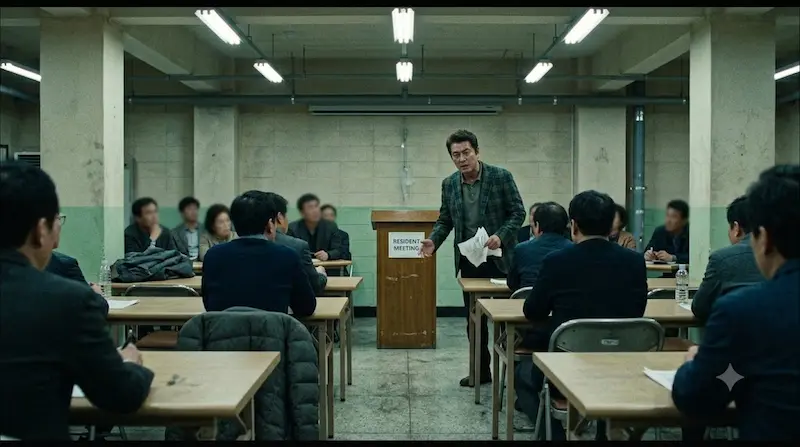
For international viewers, one term worth understanding: 장기수선충당금 (jang-gi-su-seon-chung-dang-geum), or long-term repair reserve fund. Every Korean apartment building is legally required to collect a small monthly fee from every household. That fee accumulates over decades to pay for eventual major repairs — replacing elevators, waterproofing rooftops, repainting exteriors. The fund is held in the building’s collective bank account and overseen by the residents’ representative council.
In theory, the money is transparent. In practice, most residents never look at it. And that is where the trouble starts. The drama’s 17.8 billion won figure is not fantasy. Large complexes in Seoul routinely hold funds of that size or larger, and Korean news outlets have covered multiple real cases of council corruption, contractor kickbacks, and misappropriation over the past decade.
Speaking as a 59-year-old man who has lived in a Seoul apartment for over 20 years — I looked at my own monthly bill after watching Episode 2. I did not know what half the line items were. That is exactly the reaction the show is trying to provoke, and it is why it is working.
Style Watch — Fashion, OST, and Behind-the-Scenes
Beyond the story, three things about The Apartment Job have been trending on Korean social media alongside the drama itself.
Ji Sung’s Fashion Comeback
Ji Sung’s wardrobe in Episode 1 was pulled apart on Korean style accounts within hours of broadcast. His signature Episode 1 blazer was identified as a Descente jacket, and the black leather jacket from the teaser trailer prompted comparisons to his iconic wardrobe from Protect the Boss (2011). Korean fashion blogs are already running features titled “The Jacket Guide to Watching The Apartment Job.” If you follow K-drama style, this is one of the more talked-about lead-actor wardrobes of the summer.
The OST — Ha Hyun-woo Joins “FLY”
The soundtrack news broke in mid-July: Ha Hyun-woo of the Korean rock band Guckkasten has officially recorded “FLY,” one of the drama’s key OST tracks. Ha Hyun-woo is a vocalist with genuine cross-generational appeal in Korea, and his participation immediately elevated the OST’s profile. “FLY” is built around a tight guitar riff and a driving drum line, matching the show’s mix of tension and dark humor. Additional artists including Kangnam, MigakBoys, and ANYUJIN have contributed to the wider OST playlist, now available on Spotify.
For an English-language K-drama audience, this is a small detail with real weight. Guckkasten is the kind of band Korean rock fans respect deeply, and pulling Ha Hyun-woo into a JTBC drama OST signals that the production is taking its music as seriously as its cast.
Ha Yun-kyung’s Wedding Dress Prank
The single most viral moment of the drama’s premiere week was not on screen. It was on Instagram. Ha Yun-kyung posted photos of herself in a wedding dress with the caption “Everyone, I’m getting married!” — sending Korean K-drama Twitter into a five-hour panic before she revealed the shot was actually from the Apartment Job filming set. Her character, Kang Ha-ri, shoots a wedding scene in Episode 1. The prank was carried by every Korean entertainment outlet, and the wedding dress itself became a briefly-trending fashion keyword.
Where They Filmed — Location Guide
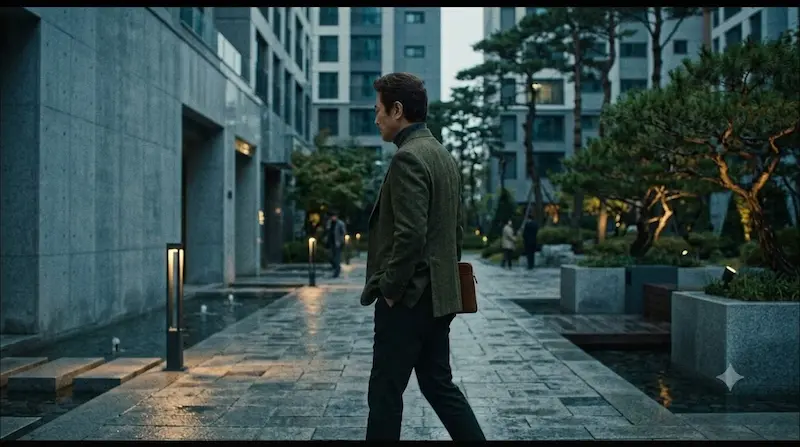
Location scouts and K-drama fan bloggers have already identified around 21 filming locations used across the first three episodes. The most notable so far:
- Oakwood Premier COEX Center — The venue for Park Hae-gang’s wedding scene (dressed on set as the fictional “Maison de Grace”) in Episode 1. The interior shots use the hotel’s actual ballroom.
- State Tower Namsan — Used for exterior establishing shots representing the corporate offices of Lee Chung-won’s construction company.
- Seogang Bridge and World Cup North Road 60-gil — Featured in the show’s Seoul establishing sequences.
- The Link Seoul, Tribute Portfolio Hotel — A recurring backdrop for wealthier residents’ scenes.
- Bondong-jip — A traditional Korean restaurant used in the Episode 2 family scenes.
For international K-drama fans planning Seoul visits, Oakwood Premier COEX and State Tower Namsan are both easily accessible via public transport and are becoming genuine pilgrimage sites for the show’s fandom.
The Real Backlash — Industry Protests
Not everyone is happy about the drama. Before the show even premiered, the Korean Association of Housing Managers (KAHM) issued formal complaints to JTBC and the production company. Their objection: the show’s promotional materials describe the 17.8 billion won repair fund as “blind money” (눈먼 돈), and they argue that this characterization defames the entire apartment management profession. The association pushed for pre-broadcast negotiations, staged individual protests outside JTBC headquarters, and issued public statements.
Their argument is understandable. Not all apartment managers are corrupt. Most are ordinary professionals doing an unglamorous job. Painting the entire fund as “blind money” risks tarring the whole industry with the same brush.
At the same time — and this is where the drama becomes interesting — the very fact that a trade association felt threatened enough to protest before the first episode aired suggests the show is closer to a real nerve than the industry might prefer to admit. The Apartment Job is not a documentary. It is fiction. But the fact that its fiction generated a real-life industry response is, in its own way, evidence that the show is doing something braver than most Korean broadcast dramas usually attempt.
Where to Watch
Netflix carries The Apartment Job in more than 190 countries with English and Korean subtitles, updated weekly within hours of Korean broadcast. Episodes drop each Saturday night at 10:40 PM KST and Sunday night at 10:30 PM KST, with international Netflix availability following shortly after.
For Korean viewers, JTBC broadcasts the drama on Saturday and Sunday nights in the premium weekend slot.
Each episode runs approximately 90 minutes — longer than the standard 60-minute Korean broadcast episode, so plan accordingly. The full 12-episode run concludes on August 16, 2026, meaning international viewers still have time to catch up before the finale.
Choco Papa’s Honest Take
Let me be straight with you. I have been watching Korean dramas for over thirty years. I have seen every version of the con-man premise the genre can produce. Most of them are hollow — they use the con as an excuse for stylish costumes and clever heists and never bother to say anything about the world. The Apartment Job is different. It is a con-man show that quietly turns into a civic drama. It asks whether a community that ignores its own money for long enough deserves whatever happens to it.
That is a question a lot of Koreans my age carry around in their bones. We grew up during the apartment construction boom of the 1980s and 1990s. Many of us bought our first apartments in the 2000s. We have all been receiving management bills for twenty or thirty years without reading them carefully. Watching Park Hae-gang set his sights on 17.8 billion won that no one has been guarding is uncomfortable for exactly the reason the show intends it to be uncomfortable. It could be your building. It could be my building.
For international viewers, do not worry if some of the apartment-management specifics fly over your head. The emotional core translates cleanly. This is a story about the price a community pays for looking away, and about a bad man who accidentally becomes the guy who forces them to look. That story works in any language.
What to Expect Going Forward
Eight episodes remain. The show has already established its three enemy factions — the construction company (Park Byung-eun’s Lee Chung-won), the corrupt corners of the residents’ council, and the various contractors feeding on the fund. Hae-gang has just won his position as building representative in Episode 3. His run for the full council presidency begins in Episode 4, airing tonight. The show is now in position to spend its middle stretch on the actual investigation before its final act.
I will be recapping episodes here in pairs. Episodes 1-2 recap is coming next, followed by Episodes 3-4 after tonight’s broadcast.
Final Verdict
★★★★½ / 5
An unusually intelligent Korean crime comedy anchored by one of Ji Sung’s best performances and by a soundtrack that takes itself seriously. Recommended especially for viewers who enjoyed Vincenzo, The Fiery Priest, or Bad Guys — but also for anyone who has ever received an apartment management bill and wondered where the money actually goes.
— Choco Papa
For continued The Apartment Job coverage, upcoming episode recaps will appear on the Apartment Job category page as they publish. If you enjoyed this guide, you may also want to read our Agent Kim Reactivated Complete Guide — another 2026 Netflix K-drama phenomenon anchored by a veteran leading man. Official series information is available on the Netflix The Apartment Job page and the JTBC official drama page. Current global rankings can be tracked at FlixPatrol.