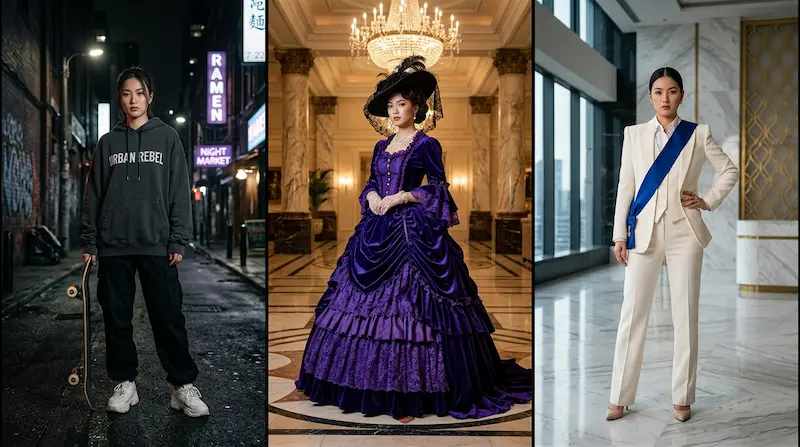
IU does not just act in K-dramas. She wears them. Over the past decade, no Korean actress has used wardrobe as a storytelling device more deliberately — from the threadbare hoodies of My Mister to the 120-plus couture outfits of Hotel Del Luna, and now to the power suits and royal gowns of Perfect Crown. Each drama, each character, each outfit tells you something words cannot. This is our complete guide to IU’s fashion evolution across every major drama, with a deep dive into her Perfect Crown wardrobe — the role that is redefining K-drama fashion in 2026.
My Mister (2018) — The Art of Having Nothing
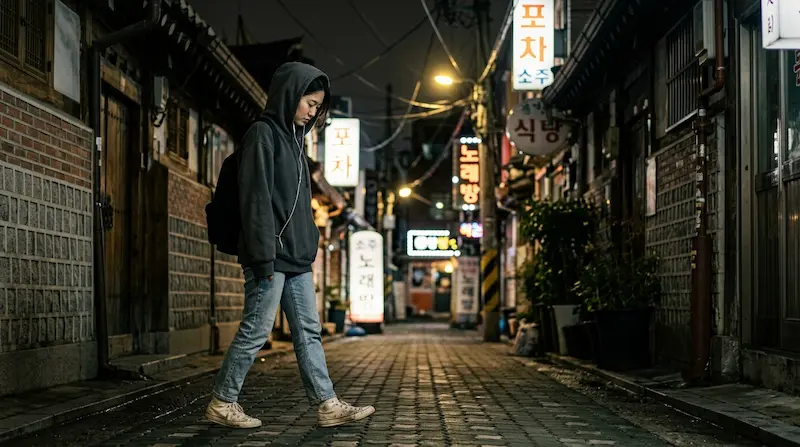
Lee Ji-an owns almost nothing, and her wardrobe reflects it. In My Mister, IU wears the same rotation of oversized hoodies, faded jeans, and worn-out sneakers across all 16 episodes. There are no brand names, no accessories, no colour palette to speak of — just muted greys, washed-out blacks, and the occasional navy. The costume choices were deliberate: Ji-an is a woman carrying two jobs, an ailing grandmother, and a mountain of debt. She does not have the luxury of fashion, and the wardrobe makes you feel that weight.
What makes this remarkable is the contrast with everything IU wore before and after. My Mister strips fashion down to its most essential function — survival. Ji-an dresses to be invisible, to avoid attention, to disappear into the crowd. The hoodie becomes her armour, not against cold weather, but against the world. When fans compare IU’s drama wardrobes, My Mister always sits at one extreme: the zero point from which everything else is measured. Reddit users in the K-drama fashion community frequently cite it as the gold standard for “anti-fashion that still tells a story.”
Hotel Del Luna (2019) — 120 Outfits, Zero Repeats
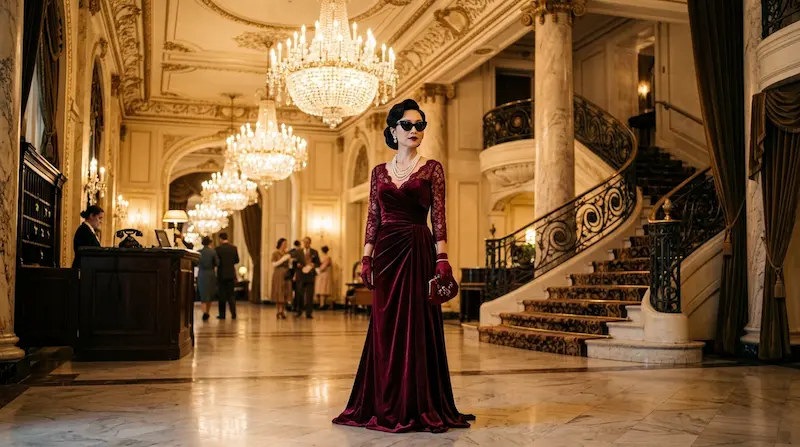
Then came Jang Man-Wol, and IU’s wardrobe exploded. Styled by the legendary Noh Joo-hee, IU wore over 120 outfits across 16 episodes — changing looks approximately every seven minutes of screen time. The estimated costume budget exceeded $8,400 per episode, a figure that was unprecedented for Korean television at the time. The wardrobe spanned decades of fashion history: 1930s shoulder-pad dresses, 1940s peplum suits, 1950s capes with wide-brim hats, and modern-day couture gowns from brands including Gucci, Chanel, Fendi, and Valentino.
The genius of Hotel Del Luna‘s fashion is that it mirrors the character’s emotional arc. In the early episodes, Jang Man-Wol wears bold colours, clashing textures, and intimidating silhouettes — structured blouses that accent the shoulders, stacked gold and pearl jewelry, dainty lace gloves, and ever-present oversized sunglasses. She dresses to dominate. As the story progresses and her walls begin to crack, the wardrobe softens: silky nightgowns, pale pink blouses, pastel pencil skirts, softer fabrics like satin and chiffon. By the finale, the accessories are minimal, the hair is always worn down, and the woman behind the costume is finally visible.
The three-phase arc — bold intimidation, elegant comfort, delicate vulnerability — became a blueprint that K-drama costume designers still reference today. Stylist Noh Joo-hee revealed in interviews that she particularly loved working with Korean brand Avouavou for the character’s more refined looks, a relationship that would later resurface in Perfect Crown.
The Producers (2015) — Idol Armour
Before the dramatic heavyweights, IU played Cindy in The Producers — a top idol with a fierce public image hiding deep insecurity. The wardrobe was cutting-edge: asymmetrical dresses, sharp-shouldered blazers, structured leather jackets paired with slim-fit trousers. Oversized sunglasses, chunky jewelry, and a signature wide-brimmed hat served as recurring visual motifs. Cindy dressed to be untouchable, and IU sold every frame of it. However, beneath the layers of glamour, the costume choices subtly hinted at vulnerability — using style as a shield, a theme that would become central to IU’s later roles.
When Life Gives You Tangerines (2024) — Jeju Simplicity
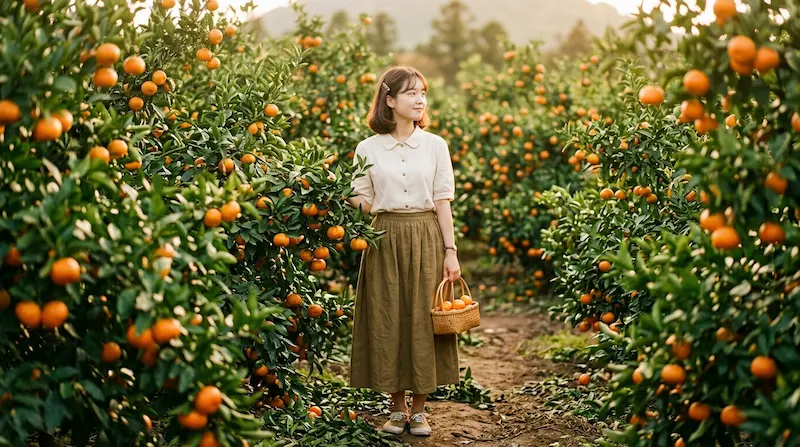
After a six-year drama hiatus, IU returned with a role that demanded the opposite of Hotel Del Luna’s excess. Set in 1950s-60s Jeju Island, When Life Gives You Tangerines dressed IU in earth-toned hanboks, simple cotton blouses, and working-class fabrics. The colour palette was warm but restrained — cream, soft brown, muted orange mirroring the tangerine groves. For her real-life appearances promoting the drama, IU leaned into a chic bob haircut with hairpins, fitted denim, crop tops, and monochrome colours — a deliberate contrast to the period costume. Fans noted that even her off-screen style during this era felt intentionally stripped back, as if the character’s simplicity had seeped into her personal wardrobe.
Perfect Crown (2026) — The Royal Chaebol Reinvention
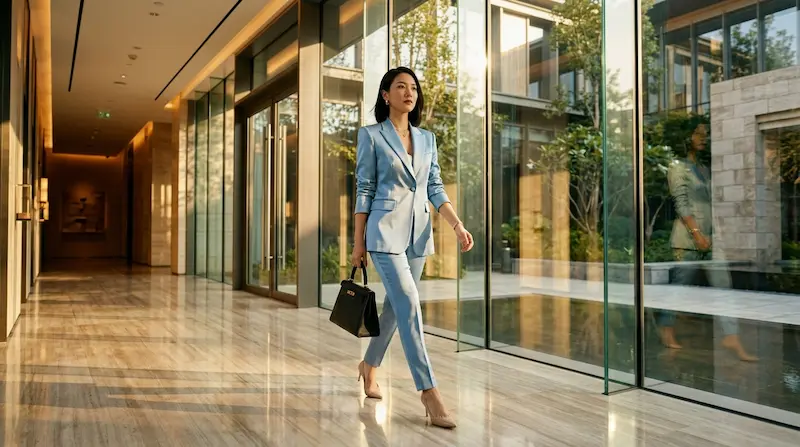
And now, Seong Hui-ju. Perfect Crown is the most ambitious wardrobe IU has ever carried, because it must communicate two identities simultaneously: chaebol CEO and future royal consort. In her own words, from a pre-premiere interview with Xportsnews: “Seong Hui-ju draws attention wherever she goes, not just as a member of a wealthy family but as a celebrity-like figure. Her default style is a sharp CEO look with tailored suits, but I also tried bold colours that intentionally break TPO, light dresses, or even jeans with red sneakers, to keep things visually interesting.”
That phrase — “intentionally break TPO” (Time, Place, Occasion) — is the key to understanding Hui-ju’s wardrobe. She does not dress to fit in. She dresses to disrupt. And the costume team, reportedly drawing on IU’s direct input, has built a wardrobe that operates on multiple levels.
Episodes 1-2: The Red Entrance
Hui-ju’s first appearance is a statement of war. She arrives in a vibrant red Balmain tweed cropped jacket and matching strappy dress, paired with Cartier Clash rose gold earrings and ring, and a Roger Vivier Jewel Efflorescence satin bag. Red is not subtle, and neither is Hui-ju. This is a woman announcing herself to the royal court — and to the audience. She follows it with a Self-Portrait denim midi dress over lace blouse (casual power), an Alice + Olivia silk tie-neck shirt (boardroom authority), an embroidered Isabel Marant blazer (creative rebellion), and a peach-toned suit with Valentino VSling bag and Boucheron diamond feather earrings (old-money elegance with a modern twist). For instance, The equestrian scene introduces a DEFEMME wool herringbone tailored crop jacket — a nod to classic heritage styling that IU wears while horseback riding with Yi An. Episode 2 closes with a standout: the Avouavou crepe round collar flare jacket and A-line skirt set in ivory, paired with the Akris lacquered leather jacket in ruby red for the driving scene. In two episodes alone, the wardrobe establishes Hui-ju’s range: she can be boardroom sharp, horse-trail rugged, or behind-the-wheel dangerous.
Episodes 3-4: Texture & Authority
The wardrobe deepens. Hui-ju trades softer palettes for structured silhouettes and bold textures. The standout is a powder-blue Avouavou silk double long jacket (₩1,289,000) paired with matching slim-leg pants and a Dior Mini Lady D-Joy bag — the most photographed look of the drama so far. Other key pieces include a Self-Portrait tweed vest with Chaumet Joséphine Aigrette earrings, a Simone Rocha x Crocs pearl-embellished clog (the drama’s most viral casual moment), an N°21 knitwear set with Piaget Rose jewelry, a floral Prada Galleria tote in soft yellow with Tasaki Akoya pearl earrings, and a pinstriped dress with Delvaux Tempête bag. The accessory game escalates: Cartier, Piaget, Dior, Delvaux, Roger Vivier, Chaumet, Boucheron, Damiani, Pomellato, Tasaki — the jewellery alone reads like a who’s who of European luxury houses.
Episodes 5-6: From Armour to Vulnerability
Here is where the wardrobe tells the love story. Episode 5 opens with Hui-ju in a sharp structured suit — still in CEO mode — but by the Naejinyeon banquet, she transitions into the powder-blue Avouavou ensemble that echoes her Episode 3 power colour, now worn softer, with less jewelry. The shift is subtle but intentional: she is still dressed for battle, but the edges are rounding. Then comes Episode 6’s waltz scene — a pure white gown that echoes the GRACE U Isabel Halter-neck silhouette from promotional materials but is far more elaborate, with a full skirt designed for movement.
This is the first time Hui-ju wears white. The bridal symbolism is unmistakable, arriving before the actual marriage has taken place. On the yacht, the transformation completes: Hui-ju strips down to a simple cream knit and wide-leg trousers — the most casual outfit in the entire drama. No brand flex. No power signalling. Just a woman on a boat with a man she is beginning to love. The wardrobe mirrors what the script cannot say yet.
The Modernised Hanbok
A separate category deserves its own attention. Hui-ju’s hanbok appearances blend traditional silhouettes with contemporary flair. The standout is the Chaikkim cheollik wonpiece C Green Sum (₩428,000) — a modern reinterpretation of the traditional cheollik robe with spring flower patterns. IU also wears modernised hanbok-inspired pieces from various Korean designers that mix traditional otgoreum ties and durumagi shapes with Western tailoring elements. These pieces serve a specific narrative function: they are the costume Hui-ju wears when entering the royal world, visually bridging her chaebol identity with her new royal status.
The Brand Universe — Who Dresses Seong Hui-ju?
Tracking six episodes of Perfect Crown, a clear hierarchy of brands emerges. Self-Portrait appears most frequently — the London-based label’s mix of lace, tweed, and houndstooth patterns serves as Hui-ju’s everyday luxury. Avouavou, the Korean brand beloved by stylist Noh Joo-hee since Hotel Del Luna, provides the structured silk pieces that define Hui-ju’s “serious CEO” mode. Balmain delivers the power entrances. Prada handles the romantic moments. For everyday hanbok-fusion pieces, Korean designers Chaikkim and DEFEMME provide the cultural bridge. Accessories rotate between Cartier, Dior, Piaget, Chaumet, Boucheron, Roger Vivier, Delvaux, Valentino, Gucci, Longchamp, Damiani, Pomellato, and Tasaki — an average of two to three luxury accessory brands per episode.
IU’s Fashion Evolution — The Complete Arc
When you place all five dramas side by side, a clear pattern emerges. Each wardrobe is a direct reflection of the character’s emotional state and social position, and IU never repeats herself.
Dream High (2011) — Pastel sweaters, flouncy skirts, oversized knits, bow hairclips, ballet flats. Girlish charm evolving into confidence. The Producers (2015) — Asymmetrical dresses, sharp blazers, structured leather, chunky jewelry. Style as a shield. My Mister (2018) — Hoodies, faded jeans, worn sneakers. Anti-fashion as survival. Hotel Del Luna (2019) — 120+ couture outfits spanning a century of fashion. Extravagance hiding vulnerability, then softening into simplicity. When Life Gives You Tangerines (2024) — Earth tones, cotton, working-class fabrics. Period authenticity with modern restraint. Perfect Crown (2026) — CEO power suits, royal hanbok fusion, and the strategic use of white. Fashion as both weapon and surrender.
The through-line is this: IU never allows a character to wear something that contradicts who they are. The clothes are always doing work — establishing status, signalling emotion, foreshadowing plot turns. That is what separates a fashion icon from an actress who happens to wear nice clothes.
Author’s Take
I have covered K-drama fashion long enough to know that most wardrobe discussions stop at “what brand is that dress?” IU’s wardrobes demand a deeper question: why that dress, in that scene, at that moment? The answer is always there if you look.
The moment that crystallises IU’s fashion intelligence for me is the yacht scene in Perfect Crown Episode 6. After six episodes of escalating luxury — Balmain, Cartier, Prada, Dior — she wears a plain cream knit. No logo. No jewelry. statement. For instance,And it hits harder than any red-carpet gown because the wardrobe has earned that simplicity. You cannot appreciate the quiet outfit without the loud ones that preceded it. That is costume design operating at screenplay level, and IU understands it instinctively.
The closest comparison in recent K-drama history is Son Ye-jin in Crash Landing on You, whose wardrobe similarly tracked her character’s emotional arc. However, IU has now done it across five distinct dramas with five completely different fashion identities. No other Korean actress has that range.
What to Expect — Episodes 7-12
With the contract marriage now official and the wedding approaching, expect Hui-ju’s wardrobe to shift further into royal territory. The Episode 7 preview shows a formal tuxedo-fitting scene for Yi An and what appears to be a traditional wedding dress consultation for Hui-ju. If the pattern holds. her wardrobe will increasingly blend chaebol power dressing with royal formality — and based on the diary epilogue, moments of private vulnerability where the armour comes off entirely. Fashion-wise, the second half of Perfect Crown may be IU’s most significant work yet.
1 thought on “IU Fashion: Perfect Crown, Hotel Del Luna & Every Drama Style Ranked”