Why This Review Exists Now
If you found this page because you are watching We Are All Trying Here and someone told you to watch writer Park Hae-young’s earlier work first, you are in exactly the right place. My Mister (나의 아저씨, 2018) is the drama that made Park Hae-young a household name, and its DNA runs through every line of dialogue in her 2026 JTBC hit. In our Complete Guide, we covered the cast, OST, filming locations, and legacy. This second installment dives into the story itself — episodes 1 through 8 — with a critic’s eye on what makes each scene land the way it does.
A quick note on structure: My Mister is a 16-episode drama that divides cleanly in half. Episodes 1-8 build the foundation — two strangers orbiting each other’s pain until they collide. Episodes 9-16, which we will cover in Part 3, detonate everything those first eight episodes set up. This review contains full spoilers for episodes 1-8 and only light references to later events.
Episodes 1-2: The Ladybug and the Envelope
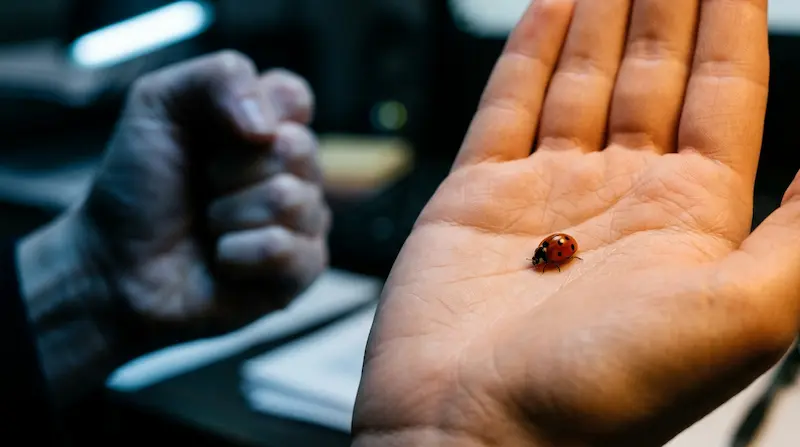
The opening minutes of My Mister establish its entire moral universe through a single insect. A ladybug flies into the office. Park Dong-hoon (Lee Sun-kyun) gently tries to catch it alive. Lee Ji-an (IU) crushes it on her arm and flicks it into the trash. In that one gesture, writer Park Hae-young tells you everything you need to know about where these two characters start: one preserves life instinctively, the other has been so brutalized that killing is a reflex rather than a choice.
The real plot engine arrives in the form of a bribe envelope delivered to the wrong person. Dong-hoon was never supposed to receive it, but its appearance triggers a chain reaction that draws Ji-an into his orbit. She is hired by CEO Do Joon-young (Kim Young-min) — who is also sleeping with Dong-hoon’s wife Yoon-hee (Lee Ji-ah) — to spy on Dong-hoon and engineer his dismissal. As a result, Ji-an plants a bug on his phone and begins listening to every sound of his life.
What makes these early episodes remarkable is how director Kim Won-seok refuses to tell you how to feel. The camera holds on faces without musical cues. Dong-hoon buys tomatoes that Ji-an had put back on the shelf, hoping to give them to her later. She is nobody to him — just a quiet temp in the office. However, he noticed she was struggling, and that was enough. This small act of anonymous kindness is the seed that will grow into the most profound relationship in K-drama history. It just takes eight more episodes for Ji-an to realize it.
Episodes 3-4: “Apologize Ten Times” and the Father Question
Episode 3 marks the first time we see Ji-an operate like a trained operative. She installs the listening device, manipulates schedules, and sabotages a rival director’s meeting — all within a single episode. The efficiency is almost thrilling to watch, until you remember she is doing this because a loan shark named Kwang-il (Jang Ki-yong) beats her regularly and threatens her deaf grandmother.
The pivotal line from episode 3 arrives when Dong-hoon discovers that Assistant Manager Kim has been trash-talking him behind his back. Instead of exploding, Dong-hoon says quietly: “Apologize ten times.” It sounds almost gentle. However, that sentence plants a narrative seed so deep that it will not bloom until episode 15, when Ji-an drops to her knees on a public street, sobbing out apologies she owes to the man whose life she helped dismantle. Writer Park Hae-young planted that payoff twelve episodes in advance. That level of structural patience is extraordinary.
Episode 4 delivers one of the drama’s most quoted exchanges. A casual acquaintance asks Ji-an what her father does. She fires back: “Why are you curious about my father? I am not at all curious about what your father does.” When the man says he was just making conversation, Ji-an cuts deeper: “That kind of question is rude.” In contrast, Dong-hoon, who overheard, simply says “I’m sorry.” Two words that acknowledge her pain without demanding she explain it. This is how Park Hae-young writes male decency — not as grand gestures, but as quiet recognition that someone else’s wound deserves respect.
The Walking Scenes: Cinematography as Therapy
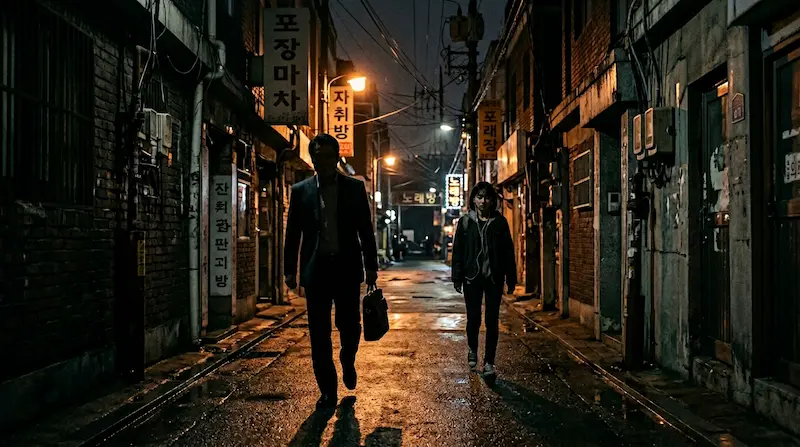
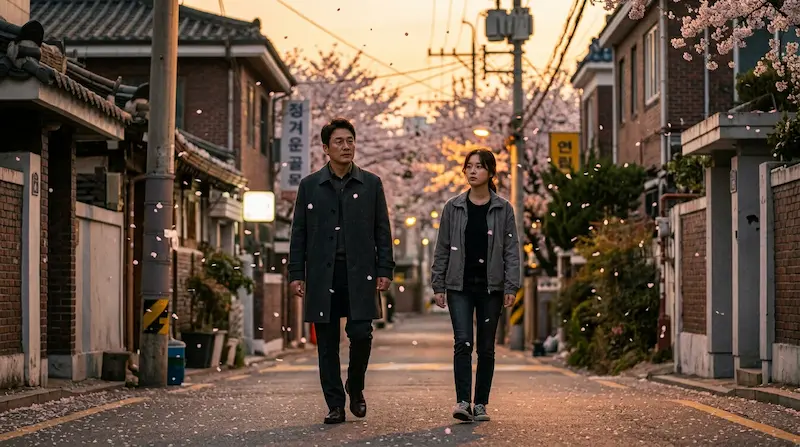
By episode 4, a visual pattern becomes impossible to ignore. Dong-hoon and Ji-an walk — endlessly, silently, through the same dimly lit streets. Director Kim Won-seok shoots these scenes with wide-angle lenses that emphasize the emotional and psychological distance between two people sharing the same frame. As one Reddit analysis noted, the cinematographer “purposely used a wide angle lens to show the big emotional and psychological gap between characters who are physically close.” The walking is not filler. It is the drama’s primary mode of communication. Before these two can speak honestly, they must first learn to exist in the same silence.
Episodes 5-6: The Earpiece and the First Crack
Episode 5 is where Ji-an’s moral crisis begins in earnest. She has been listening to Dong-hoon’s life — his breathing on the subway, his footsteps on gravel, his conversations with his brothers — and something unexpected is happening. She is beginning to care. Not romantically, not sentimentally, but in a way that has no clean label. She hears a man who is quietly drowning, and for the first time in her life, she wants to pull someone out instead of pushing them under.
Meanwhile, Dong-hoon’s world is fracturing. In episode 5, circumstantial evidence surfaces that Yoon-hee is having an affair with his boss. He does not confront her. Instead, he tells a colleague the line that becomes the drama’s unofficial thesis: “If nobody knows, then nothing happened.” This is not cowardice. It is the Korean concept of 체면 (chemyeon) — face, dignity, the desperate need to hold the structure of your life together even as termites eat through the beams. For 50-something viewers who have spent decades swallowing humiliation to keep their families intact, this line will hit like a sledgehammer.
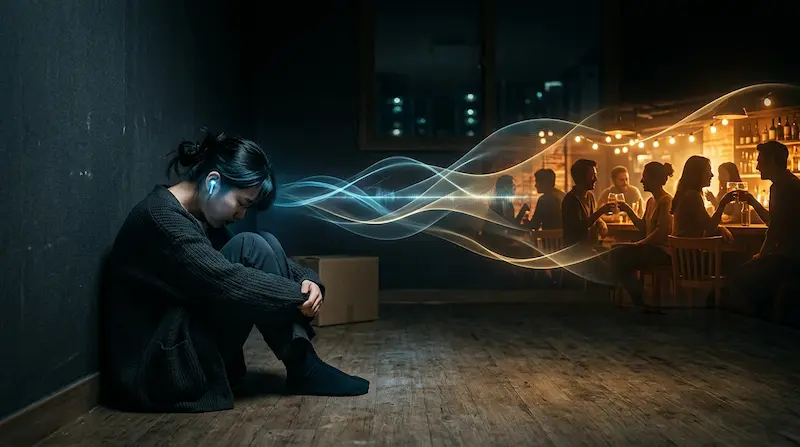
Episode 6 introduces the earpiece dynamic at full intensity. Ji-an sits alone in her dark apartment, earbuds in, listening to Dong-hoon drink with his neighborhood friends at the bar. She hears laughter, warmth, belonging — all things she has never experienced. The sound design in this scene won the Korean Broadcasting Award, and deservedly so. You can hear ice clinking in glasses, off-key singing, and the specific pitch of Lee Sun-kyun’s famously deep voice cutting through the noise. For Ji-an, this is not surveillance anymore. It is her first experience of family, delivered through a stolen audio feed.
Episodes 7-8: Sang-hoon’s Kneel and the Midpoint Turn
Episode 7 contains what many fans consider the drama’s most devastating scene before the midpoint. Dong-hoon’s eldest brother Sang-hoon (Park Ho-san) works as a building cleaner. A drunk building owner humiliates him on the stairwell, demands an apology, and forces him to his knees for ten minutes of verbal abuse. Sang-hoon complies. He has no choice — the cleaning contract is all he has.
What breaks the scene open is the reveal that follows. Sang-hoon’s mother had come to deliver a homemade lunchbox. She saw everything. She left the food at the bottom of the stairwell and went home without a word. That night, at dinner with his brothers, Sang-hoon cannot stop crying. He never explains why. He does not need to. Dong-hoon and Ki-hoon (Song Sae-byeok) simply sit with him in silence, because in this family, presence is the only medicine available.
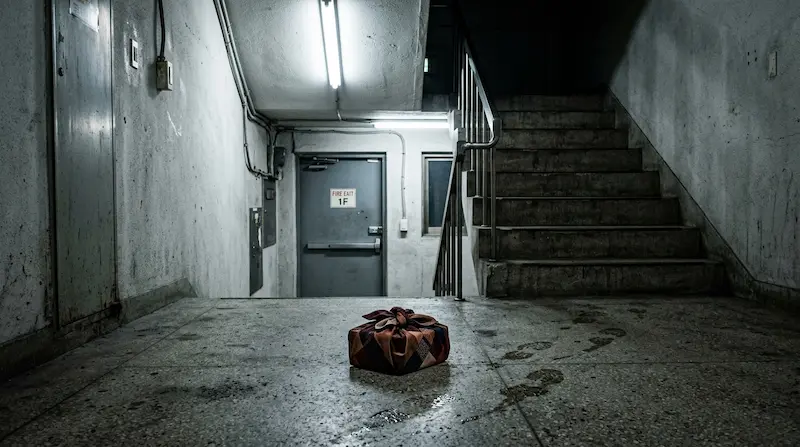
As one Korean critic observed, the reason this scene resonates so deeply with middle-aged male viewers is its ruthless honesty about class. Sang-hoon is not a lazy man. He is not stupid. He simply drew bad cards, and the world punishes him for it daily. The lunchbox left at the bottom of the stairs — made with extra fried eggs to boost morale — is the most heartbreaking image of maternal love in all of Korean television.
Episode 8: The Structural Midpoint
Episode 8 functions as the structural midpoint of the entire drama. By now, Ji-an has heard enough of Dong-hoon’s life to understand something crucial: he is not the enemy she was hired to destroy. He is the most decent person she has ever encountered, and destroying him would mean destroying the only proof she has that good people exist.
The episode ends with Ji-an making a choice that is never stated explicitly but visible in her eyes. She will stop working against him. She will not tell him about the earpiece — not yet — but she will begin to quietly protect him instead. This is the midpoint turn, and director Kim Won-seok marks it with the subtlest possible visual shift: for the first time, the camera places Dong-hoon and Ji-an in the same frame at equal eye level. Until now, she was always shot looking up at him, or from behind. From episode 8 forward, they share the frame as equals.
Author’s Take: Why Episodes 1-8 Work as a Standalone Masterpiece
There is a reason My Mister consistently appears in “Greatest K-Drama of All Time” lists eight years after its premiere. “In fact,The first half alone would justify that ranking. Writer Park Hae-young does something no other K-drama screenwriter has managed with the same precision: she builds a moral argument through behavior rather than dialogue.
Dong-hoon never gives a speech about kindness. “He buys tomatoes. On a rainy afternoon, he piggybacks a grandmother down a hill. He tells a man to apologize ten times instead of punching him. Ji-an never announces her transformation. She simply stops reaching for the knife. As a result The drama trusts its audience to notice these shifts without highlighting them, and that trust is what elevates it beyond entertainment into art.
What the Critics See
The Brazilian novelist Paulo Coelho publicly praised My Mister for its portrayal of the human condition. The 3 Quarks Daily review called it “the beauty of sorrow.” The Fangirl Verdict, one of the internet’s most respected K-drama critics, wrote: “A show that is hopeful, achingly beautiful, and bittersweet, and viscerally affecting in the absolute best way.” Moreover, These are not casual endorsements. They reflect a consensus that My Mister operates on a level that most television — Korean or otherwise — never reaches.
For viewers of We Are All Trying Here, the parallels are unmistakable. Dong-man’s belief that he is “a destructive person” mirrors Dong-hoon’s quiet conviction that his life is a prison sentence. Eun-a’s silent observation of Dong-man echoes Ji-an’s earpiece surveillance of Dong-hoon. Park Hae-young is telling the same story she told in 2018 — that the most powerful thing one human can do for another is simply to witness their pain without flinching — but with eight more years of craft behind it.
In Part 3, we will cover episodes 9-16: the confrontation with Kwang-il, the boardroom testimony, the final walk, and the ending that made an entire nation cry. If you have not watched My Mister yet, stop reading after this paragraph and go watch it. You do not need our summary. You need Lee Sun-kyun’s voice and IU’s eyes.
Part 1: My Mister Complete Guide — Cast, Plot, OST & Legacy
Part 3: My Mister Episodes 9-16 Deep Dive (Coming Soon)