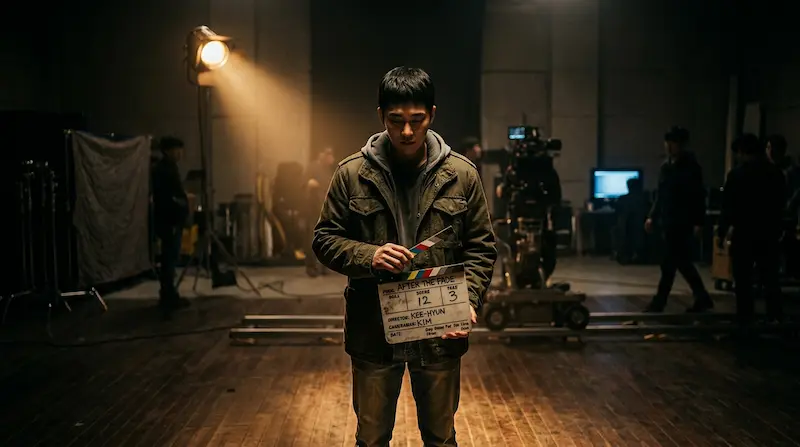
The We Are All Trying Here episode 9 recap covers the hour Park Hae-young’s introspective JTBC drama finally pulled its thesis to the surface. Specifically, Hwang Dong-man landed his first directing project, faced down loan sharks born from a debt to save his cat Yoreum, and Jang Mi-ran broke open across a soju table with a single line about acting that won’t come out the way she wants it to. Furthermore, the episode confirmed what the show’s slowly building audience had begun suspecting around episode 7 — that this drama is not building toward a plot climax but toward an emotional one. Therefore, episode 9 functions less as a turning point in the story and more as a turning point in how viewers are reading the show.
If you need the wider context, our We Are All Trying Here Complete Guide covers the cast, premise, and full episode arc. Additionally, the Episode 8 Recap sets up Dong-man’s withdrawal from the Eight and the brother foreshadowing that pays off in this hour.
The Mid-Run Pivot: Why Episode 9 Hit Different
Episode 9 arrives at the structural midpoint of the run, and the show finally trusts its audience to sit with discomfort. Specifically, the writers stop softening Dong-man’s choices with comic beats and let his desperation breathe in real time. Therefore, the episode reads as the moment Park Hae-young’s drama stops asking viewers to like its protagonist and starts asking them to recognize him.
The shift matters because it changes the contract between the show and its audience. Furthermore, the first half had divided viewers — some found Dong-man’s behavior toward those around him difficult to forgive, while others read it as the symptom the show was diagnosing rather than the disease. Consequently, episode 9 vindicates the second reading by making explicit what the earlier episodes only implied: worthlessness, in this show’s vocabulary, is not a character flaw but a condition the characters are all separately fighting in incompatible ways.
The Quiet Audience Growth
Domestic ratings have moved slowly — the show opened at 2.2% and has climbed in fractions rather than leaps. However, the buzz index and online conversation have grown disproportionately to the ratings curve, which is the classic signature of a drama building a devoted rather than broad audience. Therefore, episode 9 lands on viewers who chose to stay, and the writers reward that choice with their most emotionally honest hour to date.
The Loan Shark Scene: Dong-man’s Quiet Defiance
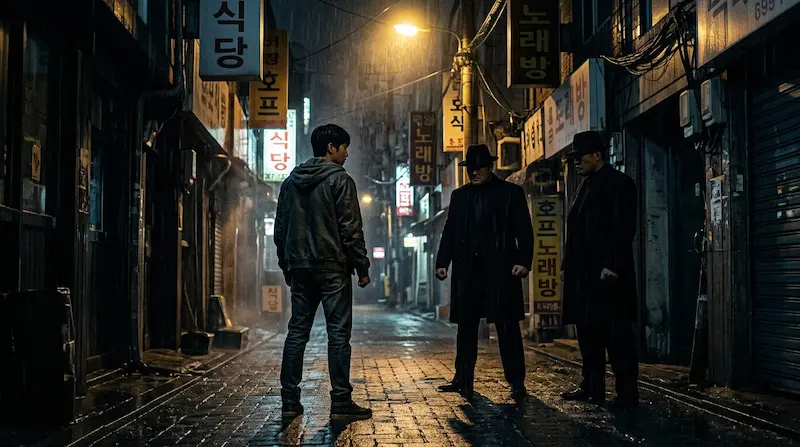
The episode’s first major sequence stages the confrontation viewers had been bracing for. Specifically, Dong-man faces the loan sharks who have been compounding his debt — a debt that began when his cat Yoreum was hit and he had nowhere else to turn for emergency vet costs. Therefore, the scene carries a moral weight the show refuses to flatten: the debt is not from gambling or vice but from love, and the loan sharks do not care about the distinction.
The Five-Times Interest
The original principal has compounded to five times its initial amount. Furthermore, the show stages this number flatly, without melodramatic emphasis, because the cruelty of the figure speaks for itself. Consequently, viewers are positioned not to feel outrage on Dong-man’s behalf but to feel the slow suffocation he has been living inside for months.
Why Dong-man Doesn’t Run
The scene’s emotional center is what Dong-man does not do. Specifically, he does not run, does not beg, does not perform contrition. Instead, he stands his ground with the same blank exhaustion the show has been quietly building since episode 1, and the loan sharks pull back not because they are intimidated but because they recognize a man who has nothing left to lose. Therefore, Dong-man’s defiance reads as the inverse of courage — it is the absence of any remaining alternative, and the show makes that distinction the entire point.
Park Hae-young’s Writing: The Worthlessness Thesis Lands
Episode 9 is the hour Park Hae-young’s writing thesis becomes legible without translation. Specifically, the show’s full title — “모두가 자신의 무가치함과 싸우고 있다” (“Everyone Is Fighting Their Own Worthlessness”) — has been a statement of premise for eight episodes. However, episode 9 converts the statement into structure, with every major character’s arc in the hour mapped onto a different posture toward the same internal enemy.
The Lion Inside the Cage
Mid-episode, Dong-man delivers the line Korean drama critics have already begun quoting. Furthermore, he describes filmmaking as a lion trapped inside the people who pursue it — not something to be tamed but something that has been caged by the years of being told to be reasonable. Consequently, the metaphor reframes the show’s first eight episodes retroactively, suggesting that what viewers read as dysfunction was the sound of the cage rattling.
Why This Writer Earns the Heaviness
Park Hae-young’s previous work — particularly the writing on My Mister and Our Beloved Summer — has trained Korean audiences to trust her with emotional weight that other writers would handle clumsily. Specifically, she does not equate suffering with depth, and she does not punish characters for the sake of punishment. Therefore, when episode 9 sits inside Dong-man’s despair without resolving it, viewers familiar with her work understand that the resolution will come, but it will come on the show’s terms rather than the genre’s.
Jang Mi-ran’s Confession: The Loneliness Behind the Stardom

The episode’s most quietly devastating sequence belongs to Han Sun-hwa’s Jang Mi-ran. Specifically, Mi-ran drinks too much and tells Byeon Eun-a what she has been holding in for the entire run — that the acting will not come out the way she wants it to, that the stardom she fought for has not done what she hoped it would, and that her interior life has not caught up with her exterior success. Therefore, the scene functions as the show’s clearest articulation of why fame and worthlessness can occupy the same person simultaneously.
The Inverse of Dong-man’s Struggle
Mi-ran’s confession works as the structural mirror of Dong-man’s loan shark scene. Furthermore, where Dong-man fights worthlessness with nothing in his hands, Mi-ran fights it with everything in hers — and the show argues that neither posture produces relief. Consequently, the writers reject the genre’s usual implication that success cures interior emptiness, and the rejection lands because Han Sun-hwa plays the moment without a trace of self-pity.
Han Sun-hwa’s Performance
Han Sun-hwa has been quietly building one of the year’s most underrated performances. Specifically, she has played Mi-ran across the run with a controlled brightness that the audience could feel was concealing something, and episode 9 finally lets her release the concealment. Therefore, the breakdown scene reads as earned rather than performed, and the show’s emotional stock in Mi-ran cashes in at exactly the moment the writers needed it to.
The Brother Returns: Hwang Jin-man’s Long-Awaited Intervention
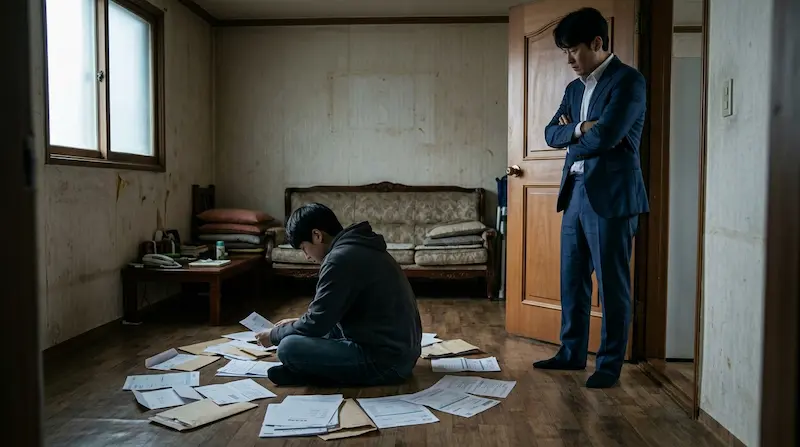
Park Hae-jun’s Hwang Jin-man finally steps into the active plot. Furthermore, the show has been foreshadowing the older brother since episode 4 through brief mentions, photographs, and Dong-man’s avoidance, and episode 9 cashes the setup with an entrance that complicates rather than resolves Dong-man’s situation. Therefore, the brother arrives not as cavalry but as another pressure point.
Why the Intervention Doesn’t Help
Jin-man’s involvement in the debt cleanup creates new friction rather than relief. Specifically, his presence reactivates a family dynamic Dong-man has been outrunning for years, and the show stages their interaction with the deliberate awkwardness of two people who share blood but no longer share language. Consequently, the scene refuses the easy beat of a reconciled brotherhood, which is exactly the refusal that makes Park Hae-young’s writing distinctive.
Park Hae-jun’s Casting
Park Hae-jun arrives with the right kind of presence for the part. Furthermore, his recent work has trained audiences to read him as a man carrying unspoken weight, and the brother role requires exactly that register. Therefore, his casting reads as another instance of the show’s quietly precise instincts about who can hold which emotional frequency.
Koo Kyo-hwan’s Performance: Restraint as Emotional Engine
Episode 9 also confirms what viewers had been suspecting since the early episodes — that Koo Kyo-hwan is delivering one of his most controlled performances to date. Specifically, he plays Dong-man with a restraint that refuses the bigger emotional beats the genre would normally reach for, and the restraint becomes the engine rather than the limit. Therefore, the loan shark scene works because Koo Kyo-hwan refuses to dramatize Dong-man’s defiance, and the directing-debut scene works because he refuses to dramatize Dong-man’s relief.
The Anti-Catharsis Choice
The performance choice mirrors Park Hae-young’s writing choice. Furthermore, both actor and writer are working from the same thesis — that the worthlessness this show is interested in is not the kind that resolves through a single cathartic moment but the kind that accumulates and recedes in small uneven movements. Consequently, episode 9 ends not with a triumphant beat but with a quieter one, and the quietness is the achievement.
The Casting Vindication
Korean critics had flagged Koo Kyo-hwan’s casting as the show’s structural foundation from the early teasers. Specifically, the role required an actor who could carry sustained low-grade despair without making it feel like a performance, and Koo Kyo-hwan’s Parasyte work had demonstrated exactly that capacity. Therefore, episode 9 reads as the casting decision finally paying its full dividend, and the remaining episodes will likely continue cashing on that foundation.
Why This Drama Is Quietly Building a Devoted Audience
We Are All Trying Here is not the highest-rated drama of the spring, and it will not become one. However, it is becoming something arguably more valuable for a writer like Park Hae-young — a drama that the viewers who stayed will not stop talking about for years. Specifically, the buzz index has climbed faster than the ratings, the international Reddit threads have grown denser with each episode, and the conversation has shifted from plot speculation to thematic excavation. Therefore, the show is in the process of converting from a broadcast property into a cultural reference point, which is the same trajectory My Mister followed in 2018.
The Emotional Pull That Doesn’t Translate as Plot
The hardest thing to articulate about this drama is also the thing that draws viewers back. Furthermore, the show offers no high-concept hook, no dramatic mystery, no soaring romance — and yet viewers who give it three or four episodes report being unable to look away. Consequently, the appeal is not narrative momentum but emotional recognition, and recognition is a harder pull than plot but a more durable one.
What Episode 10 Has to Do Now
Episode 10 airs tonight, May 17, at 22:30 KST on JTBC, and the preview suggests Oh Jung-hee’s hidden agenda will finally surface. Specifically, the show has been planting Choi Won-young’s character as a quietly destabilizing presence since the early episodes, and episode 10 appears positioned to convert his subplot into active conflict. Therefore, the show enters its second half with its thesis articulated and its remaining episodes free to test what the characters do with their now-named worthlessness.
For the structural setup that detonates in this hour, our Episode 7 Recap revisits the Eight’s collapse and the brother foreshadowing. Meanwhile, the Episode 8 Recap covers Dong-man’s withdrawal from the group and the Ma Jae-young confrontation that sets up Mi-ran’s confession. For viewers tracking the broader weekend landscape, our My Royal Nemesis Episode 4 Recap covers the competing SBS slot. For official broadcast information, the JTBC We Are All Trying Here program page lists the remaining schedule.