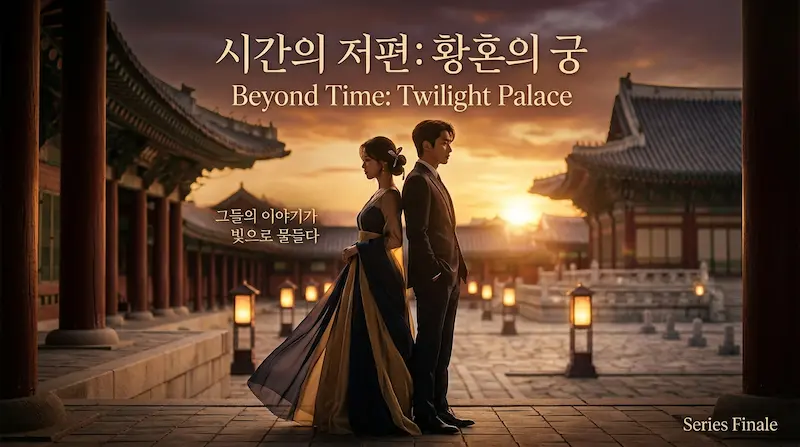
Perfect Crown Series Review and Ending Explained: Verdict
Perfect Crown (literal translation: “Great Queen of the 21st Century”) swept through 2026 like a royal decree no one could ignore. From its modest 7.8% premiere to a triumphant 13.8% finale, MBC’s weekend drama didn’t just capture ratings—it seized the cultural conversation for six straight weeks. But behind the glittering success lies a tale of soaring highs, baffling narrative stumbles, and a finale so divisive it sparked a national debate about monarchy, modernity, and what audiences truly deserve. This is the complete story of a drama that wore its crown proudly, then chose to take it off.
The Numbers: From 7.8% to 13.8% — A Six-Week Domination
The climb was as steady as it was impressive. Perfect Crown premiered to a respectable 7.8% viewership (Nielsen Korea), but word-of-mouth and viral moments propelled it into the double digits by Episode 4. The series found its rhythm, weaving a tale of a modern Korean monarchy grappling with tradition and change. The peak came with Episode 11’s stunning 13.5% (with a jaw-dropping 15.4% peak minute), cementing its place as MBC’s third-highest-rated Friday-Saturday drama ever. More than just numbers, it dominated the weekly buzz index for all six weeks of its run and claimed the global #1 spot for non-English content on Disney+. This wasn’t just a hit; it was a phenomenon.

Why Perfect Crown Worked: IU and Byeon Woo-seok’s Chemistry
At the heart of this juggernaut was the electrifying pairing of IU as Grand Queen Dowager Lee Hee-jae (Hui-ju) and Byeon Woo-seok as the young, progressive King Yi-an. Their chemistry was the drama’s non-negotiable ace. IU, returning to historical drama after years, brought a weary gravitas to Hui-ju, a woman who spent her life as a royal pawn. Byeon Woo-seok, in his first leading melodrama role, matched her with a vulnerability and quiet intensity that made Yi-an’s idealism feel earned, not naive.
The “sunbae-idol” dynamic—Hui-ju as the older, world-weary queen and Yi-an as the passionate young monarch—was fresh and compelling. Their scenes crackled with unspoken history and a slow-burn tension that felt both regal and intimately human. Whether they were sharing a silent glance across the throne room or clashing over the future of the monarchy, their connection anchored the show. For many viewers, this duo single-handedly elevated the material, making even the shakier plot turns worth enduring.
The Writing Pivot: Where Episode 8 Started to Wobble
But even the strongest royal marriages face challenges, and for Perfect Crown, the trouble began around Episode 8. The series, which had expertly balanced court intrigue, romantic tension, and social commentary, suddenly veered into convoluted territory. The introduction of a new antagonist, Minister Min (played by Noh Sang-hyun), felt rushed and his motivations murky. His abrupt heel turn from loyal subject to mustache-twirling villain lacked the necessary buildup, making his eventual downfall feel unearned.
The narrative, which had been a tight character study, began to sprawl. Subplots involving royal concubines and bureaucratic power struggles multiplied, diluting the central conflict. The pacing, once deliberate and meaningful, became uneven—some episodes felt bloated with filler, while crucial emotional beats were glossed over. By the time the series reached its final act, a significant portion of the audience felt the story had “gone to the mountains” (산으로 감), losing the sharp focus that made its early episodes so captivating.
The Ending Explained: Monarchy Abolition and the Baseball Stadium Kiss
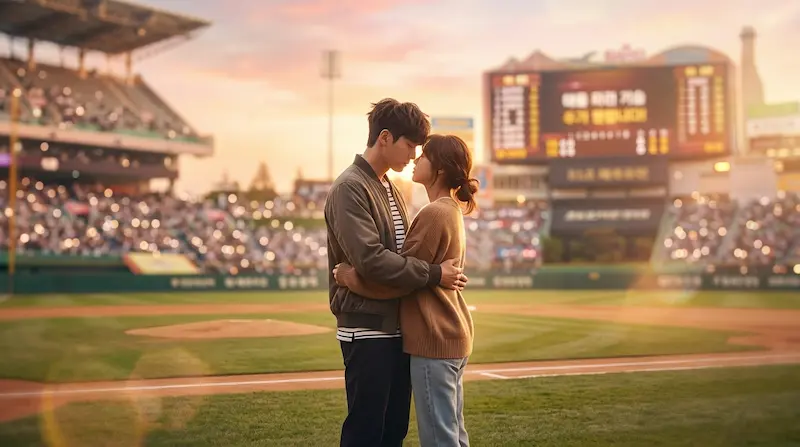
The baseball stadium kiss — Yi An's life as a commoner after abolishing the monarchy.Then came the finale—a conclusion so audacious it re-framed everything that came before. After a climactic coronation ceremony (more on that later), King Yi-an makes a shocking decision: he will abolish the monarchy. Not through revolution, but through a national referendum. The people vote, and the monarchy is dissolved. In the final scenes, Yi-an, now a private citizen, reunites with Hui-ju at a baseball stadium. The series ends with their kiss under the stadium lights, a symbol of their love finally free from the shackles of protocol.
This ending is a masterclass in polarizing storytelling. On one hand, it’s a bold, almost subversive twist. For a drama titled “Great Queen of the 21st Century,” ending with the voluntary dismantling of the very institution its title celebrates is a statement. It argues that true love and personal freedom cannot thrive under the weight of centuries-old tradition. The baseball stadium—a bastion of modern, populist Korean culture—becomes the perfect antithesis to the gilded cage of the palace.
On the other hand, many viewers found it tonally jarring and thematically inconsistent. The series had spent 11 episodes exploring the weight of duty, the beauty of tradition, and the possibility of reform from within. To have the crown simply given up felt like a narrative cop-out, a way to force a “happy ending” without earning it. The referendum, some argued, was a deus ex machina that sidestepped the complex political and emotional consequences of such a monumental decision. Was it a brave reinvention or a betrayal of its own premise? The debate rages on.
The Controversy: The “Cheonse” Incident and MBC’s Apology
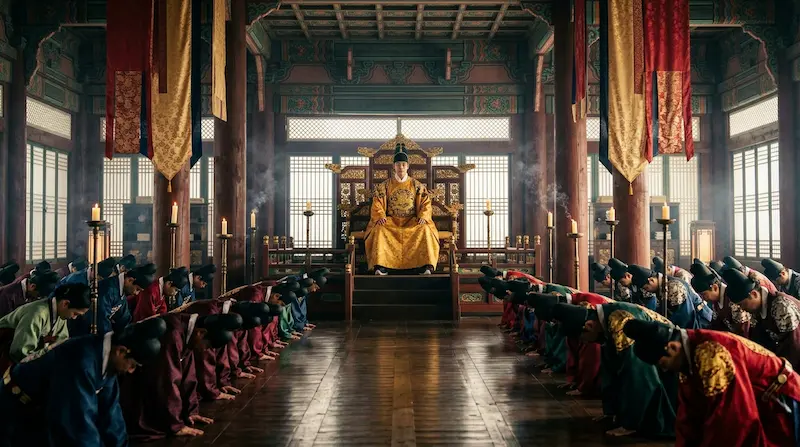
No discussion of Perfect Crown is complete without addressing the “Cheonse” controversy. In Episode 10’s coronation scene, the newly crowned King Yi-an shouts “Cheonse!” (천세, meaning “May Heaven bless”) instead of the historically accurate “Manse!” (만세, meaning “Ten thousand years”). This seemingly small error ignited a firestorm online, with historians and viewers decrying the lack of basic research. The backlash was so intense that MBC issued a formal apology just days later, with the production team bowing in contrition.
This incident became a symbol of the drama’s larger struggles with historical authenticity. While Perfect Crown was always a fusion sageuk—blending modern elements with historical setting—the “Cheonse” mistake felt like a careless disregard for the very culture it sought to dramatize. For a show that prided itself on IU’s meticulous portrayal of royal etiquette, this slip-up was a glaring wound that never fully healed in the public eye.
Critical Reception: International Praise vs. Domestic Backlash
The global response to Perfect Crown was overwhelmingly positive. International critics praised its sumptuous production design, the lead actors’ performances, and its willingness to tackle themes of gender and power within a royal framework. On platforms like Reddit and Disney+ international forums, the drama was hailed as a fresh take on the sageuk genre, with many calling it the best Korean drama of the year.
Domestically, however, the reception was a battlefield. While IU and Byeon Woo-seok were universally lauded, the writing received a more mixed verdict. The domestic audience, perhaps more attuned to the historical nuances and narrative conventions of K-dramas, was quicker to point out the plot holes and tonal shifts. The “Cheonse” controversy only amplified existing frustrations. In the end, Perfect Crown stands as a drama that was adored abroad but viewed with a more critical, if still appreciative, eye at home.
Final Verdict: A Flawed but Unmissable 2026 Drama
So, where does Perfect Crown land? Is it a masterpiece undone by a shaky second half, or a near-miss that still delivered unforgettable moments? The truth, as always, lies somewhere in between.마킹
Perfect Crown is a drama of exhilarating contradictions, presenting a narrative about a monarchy that ultimately dismantles itself. The show features a female lead who exists as both the most powerful and most powerless person in the kingdom. While this historical drama feels strikingly modern, it unfortunately stumbles over basic historical facts at times. Its narrative flaws are undeniable, particularly in its middle stretch and its divisive finale. And yet, it is also utterly captivating, thanks almost entirely to the luminous central pairing of IU and Byeon Woo-seok.
To watch Perfect Crown is to experience a royal roller coaster—thrilling highs, stomach-dropping lows, and a finale that will leave you arguing with your screen. It may not wear its crown perfectly, but it wears it boldly. For that reason alone, it is a drama of its time—imperfect, ambitious, and impossible to ignore. In the crowded landscape of 2026 K-dramas, Perfect Crown reigns supreme, not because it was flawless, but because it dared to be great.
Series Review & Ending Explained: Verdict
Perfect Crown (2026) – A six-week ratings king that gambled its legacy on a shocking finale. IU and Byeon Woo-seok’s chemistry is legendary, but the writing stumbles after Episode 8, culminating in a divisive monarchy-abolishing ending. The “Cheonse” controversy added real-world drama. A must-watch for the performances, but be prepared for a bumpy ride.
Internal Links:
- Perfect Crown Complete Guide → https://kdramarecaphub.com/perfect-crown-guide-iu-byeon-woo-seok-cast-plot/
- Perfect Crown Episode 12 Finale Recap → https://kdramarecaphub.com/perfect-crown-episode-12-finale-recap/
- Perfect Crown Episode 11 Recap → https://kdramarecaphub.com/perfect-crown-episode-11-recap/
- Sam Kim OST Part 9 → https://kdramarecaphub.com/sam-kim-if-you-were-my-world-perfect-crown-ost-part-9/
- Costume analysis is covered in our Perfect Crown Fashion Analysis.
External Link (nofollow noopener):
- MBC 공식 페이지 → https://program.imbc.com/perfectcrown