This Perfect Crown historical controversy analysis explores why Korean viewers reacted so strongly to the drama’s historical inaccuracies. The backlash goes far beyond typical viewer complaints—it touches on 5,000 years of history, collective trauma, and cultural identity.
However, the sensitivity isn’t merely about one drama’s mistakes. Specifically, it reflects a deep-seated historical consciousness shaped by centuries of invasions, cultural suppression, and the ongoing struggle to preserve Korean identity. Furthermore, the controversy reveals how modern Koreans balance pride in their cultural achievements with anxiety about historical erasure.
Therefore, understanding this reaction requires looking beyond surface-level criticisms to the historical and psychological factors at play. Meanwhile, if you need the full story context first, start with our Perfect Crown Complete Guide before diving into this analysis.
Historical Background: The Roots of Korean Sensitivity
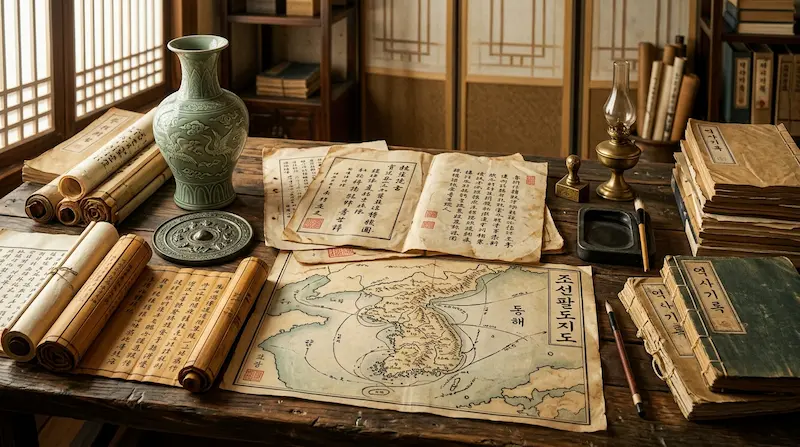
The sensitivity of Koreans to historical distortion is deeply rooted in the thousands of years of experience on the Korean Peninsula. However, the modern manifestation of this sensitivity was shaped by the traumatic events of the 20th century.
5,000 Years of Defense: Never Invading, Always Defending
Korea’s historical narrative is unique among East Asian nations: Korea has never invaded another country, but has repelled thousands of invasions over millennia. From Chinese dynasties to Mongol hordes, Japanese pirates to modern imperial powers, Korean civilization has maintained its integrity through defense rather than expansion.
The Japanese Colonial Period: Systematic Cultural Suppression
- 1910-1945: Japanese colonization involved systematic eradication of Korean culture
- Language banned: Korean language education outlawed, Korean names forced to be changed
- History rewritten: Korean history textbooks replaced with Japanese colonial narratives
- Cultural artifacts stolen: Thousands of Korean cultural treasures taken to Japan
- Archaeological distortion: Japanese scholars promoted theories denying Korean cultural achievements
The Post-Liberation Struggle for Historical Truth
After 1945, Korea faced the task of reclaiming its history from colonial distortions. However, the division of the peninsula and subsequent military governments meant that historical recovery was often politicized. It wasn’t until the democratization movement of the 1980s that independent historical scholarship could flourish.
The Modern Discovery of Buried History
Since the 1980s, Korean historians have been uncovering suppressed aspects of their past:
- Early Korean kingdoms: Reassessment of Gojoseon, Buyeo, and Goguryeo’s significance
- Cultural achievements: Recognition of Korean contributions to East Asian civilization
- Resistance movements: Discovery of previously unknown independence activists
- Comfort women: Uncovering the full scope of wartime atrocities
This process of rediscovery has created a generation of Koreans who are both proud of their heritage and deeply sensitive to any perceived distortion.
Psychological Mechanisms: Why Distortion Triggers Strong Reactions
The Korean reaction to historical distortion isn’t merely academic—it’s deeply emotional. Understanding the psychological mechanisms helps explain why seemingly minor inaccuracies provoke such intense responses.
Collective Trauma and Historical Memory
Korean society carries collective trauma from:
- Japanese colonization: 35 years of cultural suppression and exploitation
- Korean War: 3-year conflict that divided the nation and caused massive casualties
- Military dictatorships: Periods of censorship and human rights abuses
- Continued division: 70 years of separation from family members
These traumas create what psychologists call “historical trauma”—the transmission of trauma across generations through cultural memory, family stories, and national narratives.
Cognitive Dissonance and National Identity
Koreans experience cognitive dissonance when:
- Their national narrative of resilience faces external challenges
- Historical achievements are minimized or denied
- Cultural symbols are appropriated or misrepresented
- The result: Strong emotional reactions as the mind tries to resolve the dissonance.
The “Never Forget” Mentality
Unlike some cultures that can “move on” from historical grievances, Korean culture emphasizes remembering:
- “Never again”: The promise to prevent future cultural suppression
- Historical justice: The belief that truth must be acknowledged before reconciliation
- Cultural preservation: Active efforts to maintain language, traditions, and heritage
This mentality makes Koreans particularly vigilant about any attempt to distort or minimize their history.
The Perfect Crown Case: A Modern Flashpoint
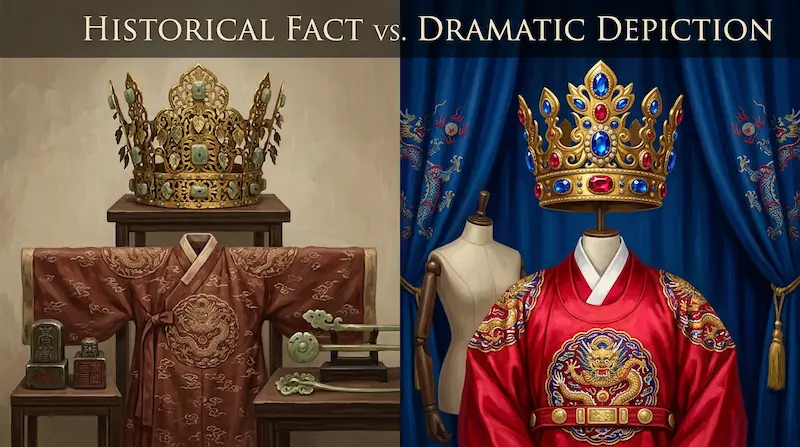
The backlash against Perfect Crown didn’t emerge from nowhere—it tapped into existing sensitivities about historical representation. The drama became a lightning rod for broader concerns about cultural ownership and historical accuracy.
The “Cheonse” Controversy: Symbolism Over Substance
While the “cheonse” (천세) vs “manse” (만세) debate captured headlines, it symbolizes deeper issues:
- Historical fact: Joseon used “cheonse” for the king, while “manse” was reserved for the emperor
- Drama context: In an alternate history where Korea is a constitutional monarchy, “manse” might be appropriate
- Korean reaction: The use of “cheonse” was seen as demoting the Korean monarch to a tributary status
- Why it matters: It touched on the sensitive question of Korean sovereignty and equality with China
The Costume Controversy: Cultural Appropriation or Creative License?
The drama’s costumes sparked debate because:
- Some elements appeared to draw from Chinese Ming/Qing dynasty styles rather than Joseon
- The dragon robe (gonryongpo) design was criticized for resembling Chinese imperial robes
- Traditional Korean patterns and colors were sometimes replaced with Chinese-inspired designs
- Korean perspective: This wasn’t creative license but cultural appropriation that erased Korean distinctiveness
The International Dimension
The controversy took on international dimensions when:
- Chinese netizens accused Koreans of “cultural theft”
- Korean netizens accused Chinese media of historical revisionism
- Both sides dug into entrenched positions, making constructive dialogue difficult
- The result: A localized drama controversy became a proxy for Sino-Korean historical tensions
The “Cheonse” Controversy: A Symbol of Deeper Issues
The “cheonse” vs “manse” debate deserves special attention because it encapsulates the broader controversy’s complexity. This single word became a flashpoint because it symbolizes competing historical narratives.
Historical Context of the Terminology
In traditional East Asian diplomatic hierarchy:
- China: Used “manse” (萬歲) for the emperor, meaning “ten thousand years”
- Joseon Korea: As a tributary state, used “cheonse” (千歲) for the king, meaning “thousand years”
- Vietnam/Lee Dynasty: Similarly used “cheonse” to acknowledge Chinese suzerainty
- Japan: Used “banzai” (萬歲), same as Chinese pronunciation
The distinction was not merely linguistic but political—it reflected Korea’s status as a tributary state within the Chinese sphere of influence.
The Drama’s Narrative Context
Perfect Crown is set in an alternate history where Korea:
- Remains a constitutional monarchy in the 21st century
- Presumably maintains full sovereignty as an independent nation
- Has no tributary relationship with China
In this context, using “cheonse” instead of “manse” creates a logical inconsistency: why would a sovereign monarchy use the terminology of a tributary state?
Why Koreans Reacted So Strongly
For many Koreans, the “cheonse” controversy wasn’t about historical pedantry but about:
- National dignity: Being reduced to a tributary status, even in fiction
- Sovereignty assertion: The right to self-identify as an equal nation
- Historical justice: Rejecting any narrative that diminishes Korean independence
- Cultural respect: Expecting creators to understand basic aspects of Korean history
The reaction revealed how deeply Koreans feel about any suggestion of inferiority or subordination in historical narratives.
Cultural Identity and the Weight of History
The Perfect Crown controversy ultimately centers on cultural identity—what it means to be Korean in a globalized world where historical narratives are constantly contested.
The Korean Historical Consciousness
Korean historical consciousness is shaped by:
- 5,000 years of continuous history: One of the world’s oldest continuous civilizations
- Resilience through invasions: Surviving multiple attempts at cultural erasure
- Rapid modernization: Transforming from one of the world’s poorest nations to a cultural powerhouse
- Global recognition: Experiencing both pride in Korean Wave and anxiety about cultural appropriation
This consciousness creates both strength and vulnerability. Koreans take pride in their cultural achievements and resilience, but they also fear losing control of their own narrative.
The “Cultural Theft” Anxiety
Many Koreans perceive historical distortion as part of a pattern of cultural appropriation:
- China’s Northeast Project: Attempts to claim Goguryeo history as Chinese
- Japan’s territorial claims: Continued assertions about Dokdo/Takeshima
- Global media: K-pop, K-drama, and Korean cuisine often presented without context
- Result: A sense that Korean culture is being diluted, misrepresented, or stolen
The Perfect Crown controversy tapped into these broader anxieties, making it about more than just one drama’s inaccuracies.
The Role of Social Media
Social media amplified the controversy by:
- Providing platforms for historical debates to spread quickly
- Allowing ordinary citizens to participate in cultural defense
- Creating echo chambers where positions became more extreme
- However, social media also enabled:
- Fact-checking and historical education
- International dialogue about historical issues
- Mobilization of cultural preservation efforts
The double-edged nature of social media made the controversy both more intense and more complex.
International Parallels: When History Becomes Controversial
While the Korean sensitivity might seem unique, similar controversies have occurred worldwide when historical narratives are challenged or distorted.
Braveheart and Scottish History
The 1995 film *Braveheart* sparked outrage among Scottish historians for its numerous inaccuracies:
- William Wallace’s portrayal: The film depicts him as a commoner when he was actually a knight
- Historical timeline: Events are compressed and characters combined
- Cultural symbols: Kilts, which were not worn in the 13th century
- Scottish reaction: Many Scots felt the film misrepresented their history and culture
Much like Koreans, the Scots possess a strong historical identity forged through resistance against British rule. The inaccuracies in the film were seen as undermining the contributions the Scottish people have made to their own history.
The Patriot and American Revolution
The 2000 film *The Patriot* faced criticism for its portrayal of British soldiers during the American Revolution:
- British reaction: Many British viewers felt the film portrayed British forces as excessively brutal and barbaric
- Historical debate: The film’s depiction of war crimes committed by British troops was disputed by historians
- American perspective: Some Americans saw it as patriotic storytelling, while others acknowledged the inaccuracies
The controversy highlighted how historical films can become entangled in contemporary national identities and international relations.
The Crown and British Royal History
Netflix’s *The Crown* has faced ongoing criticism for its portrayal of the British royal family:
- Royal family reaction: Some members reportedly feel the series invades their privacy and distorts events
- Historical accuracy debates: Each season generates discussion about what’s fact vs. fiction
- British public: Opinions are divided between those who see it as entertainment and those who see it as historical revisionism
Unlike the Perfect Crown controversy, *The Crown* has generally avoided accusations of cultural appropriation or national disrespect, partly because it deals with a still-living institution rather than a historical civilization.
Common Patterns in Historical Controversies
These international examples reveal common patterns:
- National trauma: Histories involving colonization, invasion, or oppression are particularly sensitive
- Cultural symbols: Misuse of cultural symbols (clothing, flags, rituals) triggers strong reactions
- Identity politics: Historical narratives become proxies for contemporary identity debates
- Social media amplification: Controversies spread faster and become more intense in the digital age
The Korean reaction to Perfect Crown fits these patterns, suggesting it’s part of a global phenomenon rather than a uniquely Korean pathology.
Final Verdict: Understanding the Korean Perspective
The Perfect Crown controversy offers a window into Korean historical consciousness—one shaped by resilience, trauma, pride, and anxiety. Understanding this perspective requires moving beyond judgments of “over-sensitivity” to recognize the deeper historical and psychological factors at play.
What the Controversy Reveals About Korea
The backlash demonstrates:
- A vibrant culture: Koreans care deeply about their heritage and its accurate representation
- Historical awareness: A well-informed public that knows its history and notices inaccuracies
- Cultural confidence: The willingness to speak up for cultural respect on the global stage
- Collective memory: History is not seen as dead facts but as living memory that shapes identity
Balancing Creative Freedom and Cultural Respect
The controversy raises important questions about the responsibilities of historical storytelling:
- Where is the line between creative license and cultural distortion?
- How can creators respectfully portray cultures not their own?
- What obligations do artists have to historical accuracy when dealing with living cultures?
There are no easy answers, but the discussion itself is valuable for promoting cross-cultural understanding.
Moving Forward: From Controversy to Dialogue
The Perfect Crown controversy could become a catalyst for:
- Better historical consultation: Encouraging creators to work with cultural experts
- Cross-cultural education: Using popular media as a starting point for historical learning
- International dialogue: Creating spaces for constructive discussion about historical representation
- Cultural exchange: Building bridges between Korean and global audiences
The goal shouldn’t be to silence creative expression but to foster more informed and respectful storytelling.
Final Thoughts
The intensity of the Korean reaction to Perfect Crown stems from a painful history of cultural suppression and a hard-won sense of cultural pride. It reflects a society that has fought to preserve its identity against overwhelming odds and now seeks its rightful place in the world with both pride and profound historical awareness.
Understanding this perspective doesn’t require agreeing with every criticism or rejecting creative freedom. It simply requires recognizing that for many Koreans, history isn’t just about the past—it’s about who they are today and who they aspire to be tomorrow. In that light, the passion behind the backlash becomes not just understandable, but admirable.
For the official MBC programming page, see MBC Perfect Crown.
Therefore, the final word: the Perfect Crown controversy is more than a drama dispute—it’s a window into the soul of a nation that has endured, survived, and now seeks its rightful place in the world with both pride and profound historical awareness.