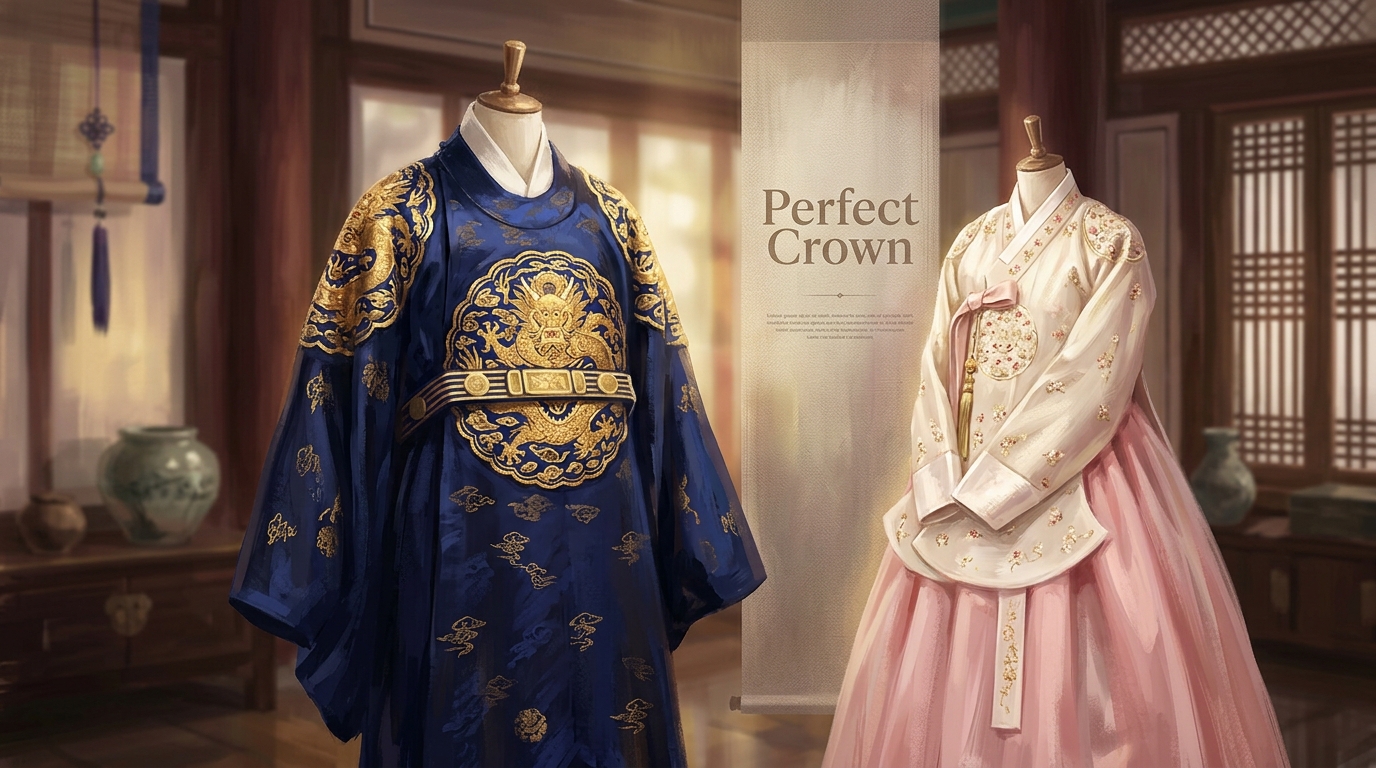
This Perfect Crown fashion analysis dives deep into the drama’s most talked-about costumes: Byeon Woo-seok’s gonryongpo and IU’s hanbok. The clothing in Perfect Crown is not just wardrobe—it’s storytelling.
However, the symbolism runs deeper than royal aesthetics. Specifically, the colors, fabrics, and accessories mirror the characters’ internal journeys and the show’s central themes of power, identity, and sacrifice. Furthermore, the costume design bridges historical accuracy with dramatic necessity, creating a visual language that viewers intuitively understand.
Therefore, whether you’re a history buff, a fashion enthusiast, or just a fan of the drama, this analysis breaks down every stitch and seam. Meanwhile, if you need the full story context first, start with our Perfect Crown Complete Guide before diving in.
The Royal Weight: Symbolism in Byeon Woo-seok’s Gonryongpo
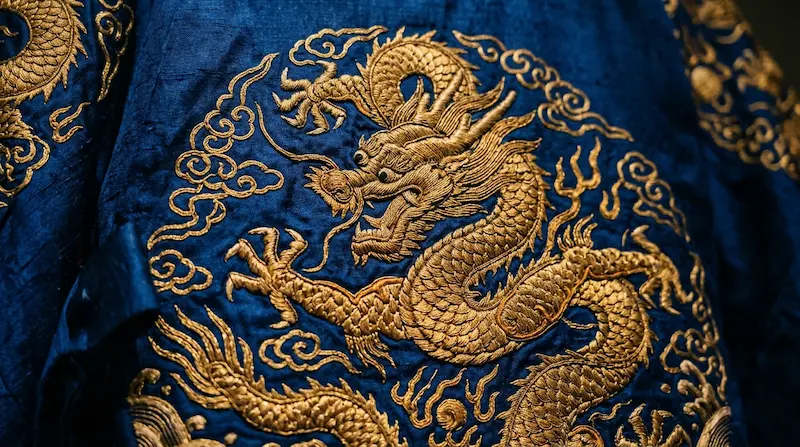
Byeon Woo-seok’s Yi Han wears the gonryongpo—the dragon robe of the crown prince—with a quiet authority that reflects his character’s burden. Consequently, every design choice in the costume reinforces his royal destiny and personal conflict.
The Dragon Motif: Power and Prophecy
The five-clawed dragon embroidered on the gonryongpo is reserved for the heir apparent. Furthermore, the dragon’s posture—coiled and ready to strike—mirrors Yi Han’s suppressed rage against the monarchy’s constraints.
Color Psychology: Why Royal Blue?
Blue in Joseon-era clothing symbolized integrity and steadfastness. However, the drama deepens the meaning: Yi Han’s blue robe contrasts with the king’s yellow, visually establishing his role as the “true north” of the royal family.
Fabrics and Embroidery: Status and Sacrifice
The robe uses silk for the outer layer and hemp for the lining, a practical choice for Korean winters. Meanwhile, the gold thread embroidery, while beautiful, would have been incredibly heavy—a physical metaphor for the weight of the throne.
IU’s Hanbok: From Commoner to Queen in Silk and Cotton
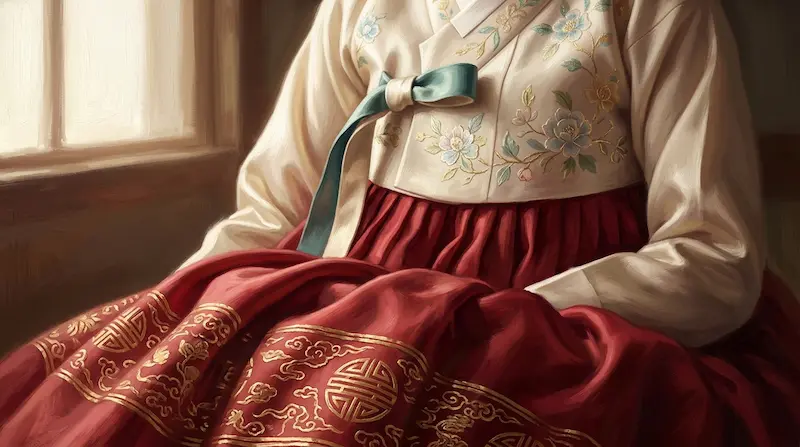
IU’s Yi An undergoes the most dramatic costume transformation in the series. Specifically, her hanbok evolves from rough-spun cotton to sumptuous silk, charting her journey from commoner to queen consort.
Early Episodes: The Cotton Choihanbok
Yi An’s initial outfits use unbleached cotton with minimal decoration. Furthermore, the absence of otgoreum (the bow on the jeogori) signals her unmarried status and low social standing.
The Royal Transformation: Silk and Symbolism
Once she becomes crown princess, her hanbok shifts to silk with intricate patterns. However, the drama retains a subtle detail: she continues wearing a small jade hairpin from her childhood—a nod to her roots.
Color as Character: The Red Revolution
Yi An’s most iconic look is her red chima (skirt) with a gold-patterned jeogori. Consequently, red—a color traditionally reserved for royalty—visually announces her claim to the throne and her break from convention.
Color Psychology: Why Blue Dominates Yi Han’s Wardrobe
While Yi An’s wardrobe explodes with color, Yi Han’s remains steadfastly blue. Specifically, this is not a costume oversight but a deliberate character choice that speaks volumes.
Blue as Loyalty and Restraint
In Confucian color theory, blue represents loyalty and self-cultivation. Furthermore, Yi Han’s unwavering dedication to his duty and his quiet emotional restraint are embodied in this hue.
The One Exception: The Black Gonryongpo
In episode 8, Yi Han wears a black gonryongpo during his moment of political rebellion. Consequently, the color shift signals his temporary rejection of royal constraints and embrace of his darker impulses.
Costume Continuity: A Visual Through-Line
Even in casual scenes, Yi Han often wears blue inner robes. Therefore, the color becomes his signature, making him instantly recognizable even when not in full regalia.
Historical Accuracy vs. Dramatic Flair: What the Drama Changed
The Gonryongpo: More Dragon, Less Restraint
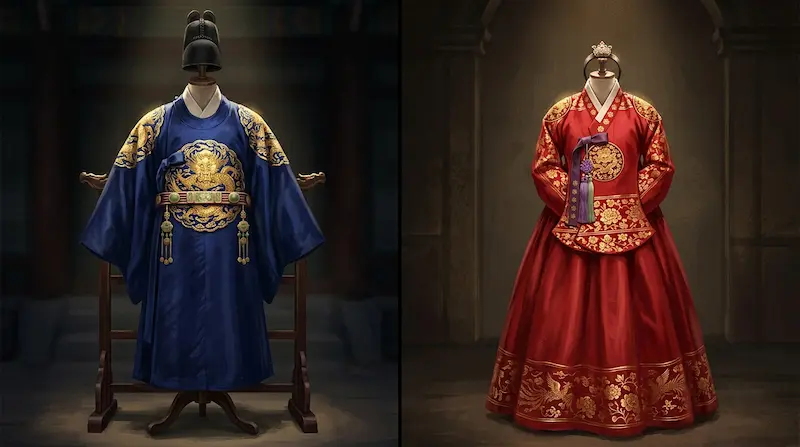
Historically, Joseon gonryongpo featured smaller, more abstract dragon motifs. However, Perfect Crown amplifies the dragons to mythical proportions for dramatic effect. Furthermore, the show adds glowing embroidery that catches the light during key scenes—a purely cinematic invention.
The Hanbok: Modern Silhouettes, Traditional Soul
Yi An’s royal hanbok uses a slimmer, more modern silhouette than historical examples. However, the drama retains traditional construction methods like the goreum tie and the baeja vest. Consequently, the costumes feel both fresh and authentic.
The Cheonse Incident’s Costume Echo
Interestingly, the “cheonse” controversy extended to costumes: some historians noted that the king’s dragon robe in the coronation scene uses five claws (imperial) instead of four (royal). Therefore, the drama repeated the historical inaccuracy in multiple design layers.
The Accessories That Tell the Story: Hairpins, Belts, and Shoes
The drama’s attention to detail extends to the smallest accessories. Specifically, these items often carry more narrative weight than the main garments themselves.
Yi Han’s Belt: The Dragon’s Tail
His belt (daedae) features a dragon-head buckle that mirrors the motifs on his gonryongpo. Furthermore, in episode 12, he gives the belt to Yi An as a token of his abdication—a poignant moment of costume storytelling.
Yi An’s Hairpins: A Timeline in Jade and Gold
Her progression from a simple wooden hairpin to an elaborate gold phoenix hairpin charts her rise in status. However, she keeps the wooden one tucked in her sleeve until the end—a private reminder of who she was.
Shoes: The Ground Beneath Their Feet
Yi Han’s shoes have thick wooden soles, literally elevating him above others. Meanwhile, Yi An’s shoes evolve from plain white cloth to embroidered silk, reflecting her changing relationship with the ground she walks on.
Behind the Seams: The Costume Team’s Design Philosophy
The drama’s costume designer, Lee Ji-young, revealed in interviews that she approached the project as “historical fiction with emotional truth.” Consequently, her team spent six months researching Joseon-era clothing before taking creative liberties.
Research and Recreation
The team studied museum pieces and historical texts, including the Gyuhapchongseo (Women’s Encyclopedia). Furthermore, they commissioned traditional weavers in Korea and China to produce custom fabrics using period-accurate techniques.
The Color Palette: A Unified Vision
Lee and her team established a strict color code: blue for Yi Han (loyalty), red for Yi An (passion/rebellion), yellow for the king (imperial authority). Therefore, every costume decision flowed from this emotional color theory.
Practical Challenges: Filming in Period Clothing
The actors trained for weeks to move naturally in the heavy costumes. Meanwhile, the costume department built multiple replicas of each major outfit to accommodate the drama’s tight shooting schedule.
Final Verdict: Do the Clothes Make the Monarch?
So where does this Perfect Crown fashion analysis land? Honestly, the costumes are not just beautiful—they are essential to understanding the drama’s themes.
What It Got Right
The emotional truth of the costumes, the color symbolism, and the way clothing charts character arcs. Furthermore, the decision to blend historical silhouettes with modern drama aesthetics makes the show accessible to global audiences.
What It Got Wrong
The historical inaccuracies—particularly the dragon claws and the use of certain colors—will bother purists. However, these choices serve the drama’s themes of reinvention and rebellion, so they function narratively even if they’re not academically correct.
Worth Analyzing?
Absolutely. Meanwhile, set your expectations: this is a study in how costume design can elevate a good drama to a visually unforgettable one. For the official MBC programming page, see MBC Perfect Crown.
Therefore, the final word: Perfect Crown‘s costumes are a masterclass in visual storytelling—proof that in the right hands, clothing can speak louder than dialogue.
Further reading: