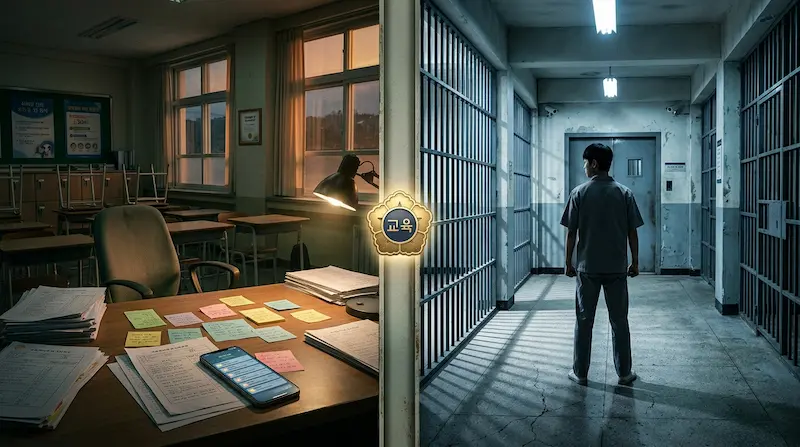
The Teach You a Lesson episodes 5-6 recap covers the show’s hardest pivot yet. Episode 5 walks into an elementary school where a teacher has reached her breaking point under relentless parent harassment. Meanwhile, episode 6 walks into a middle school where four delinquents weaponize Korea’s juvenile age law to run a drug-trafficking ring. On the surface, these look like two separate cases. However, both episodes share a single brutal observation about Korean society: adults keep hiding behind their own children to avoid accountability. This Teach You a Lesson episodes 5-6 recap maps every plot beat, identifies the real-world cases that inspired the writing, and explains why episode 5 became one of the most-discussed hours of Korean television in 2026.
Where We Left Off (Episodes 3-4 Recap)
Han Ye-ri and Cheon Sang-yeol — The Bureau’s Twin Victories
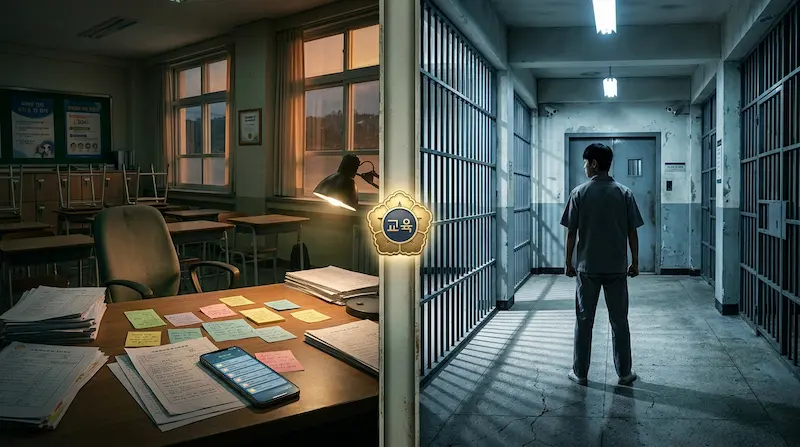
Episodes 3 and 4 closed with two major bureau wins. First, influencer-bully Han Ye-ri ended up in juvenile detention after her viral SNS manipulation drove a teacher to suicide. Second, corrupt teacher Cheon Sang-yeol was exposed for running an organized grade-fraud operation at Chukmyeong Foreign Language High School. Both cases established the bureau’s pattern. Specifically, the team identifies a teacher rights violation, infiltrates the school, and delivers a punishment that exceeds what the regular legal system would produce. Episodes 5-6 then ask a harder question. What happens when the violators are not students, but the adults who are supposed to protect them?
Episode 5 Opens — An Elementary Teacher on the Edge
Choi Ji-seon and the 89 Missed Calls
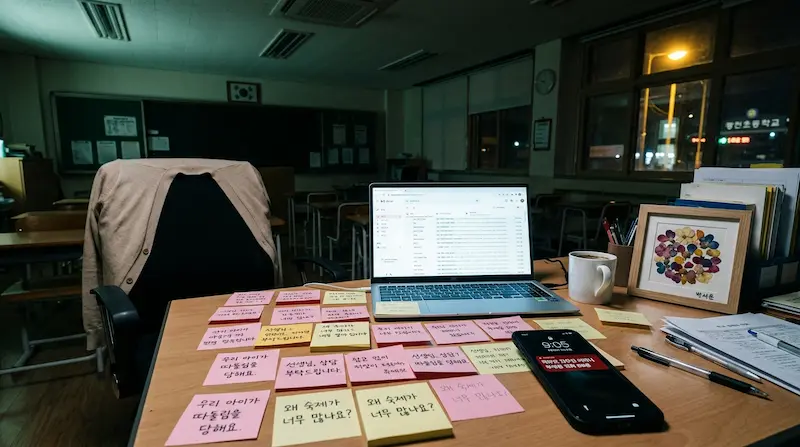
Episode 5 opens inside the first-grade classroom of Hyeonjung Elementary School. The camera lingers on teacher Choi Ji-seon’s desk. Sticky notes pile across it in layers. Her phone screen shows 89 missed calls from a single parent. Furthermore, her inbox has hundreds of unread complaint messages. Choi Ji-seon has reached her breaking point and attempts to take her own life. She survives, but the trauma forces her into extended sick leave. The bureau receives the case as a teacher rights violation. As a result, Na Hwa-jin steps in as her temporary replacement to investigate from inside the classroom.
The Real-World Mirror — The 2023 Seoi Elementary Tragedy
Korean viewers recognized the storyline within minutes. Episode 5 draws directly from the 2023 Seoi Elementary School teacher case. In June 2023, a young elementary teacher in Seoul took her own life after sustained harassment by a parent over a minor classroom incident. The case triggered a nationwide teacher protest movement and forced the Ministry of Education to reform teacher rights protection law. Additionally, episode 5 borrows visual details from the 2018 Gimpo daycare teacher case, where a teacher died after similar parent harassment. International viewers without this context may read the episode as melodrama. However, Korean viewers experience it as documentary.
The Parent Behind the Harassment — Lee Ji-young
A Mother’s “Love” as a Weapon
The harasser is Lee Ji-young, played by Park Ji-yeon. She runs the school’s most influential parent group and weaponizes her social position. Specifically, she files dozens of complaints daily, demands special treatment for her son Woo-jin, and routinely calls Choi Ji-seon’s personal phone outside school hours. Moreover, Lee Ji-young files a false child abuse complaint against the teacher when classroom discipline doesn’t go her way. Her stated motivation throughout is consistent. She insists everything she does is “for my son.” That phrase becomes the episode’s central poison.
The Husband Who Enabled Everything
Lee Ji-young is not acting alone. Her husband Kim Seok-hyeon, played by Kwon Dong-ho, works at a respectable bank by day and harasses Choi Ji-seon at night. Together, the couple files coordinated complaints, makes threatening visits to the school, and pursues legal action designed to bury the teacher in paperwork. In the original webtoon, Kim Seok-hyeon eventually shows remorse. By contrast, the drama version doubles down. He remains complicit until the final courtroom scene, where he avoids eye contact while his wife is sentenced.
Na Hwa-jin’s Undercover Substitute Teaching
Playing the Compliant Teacher
Na Hwa-jin enters Hyeonjung Elementary in his most uncharacteristic mode yet. He kneels. He apologizes. He acts like the agreeable replacement teacher Lee Ji-young has been demanding all year. The bureau’s strategy depends on letting Lee Ji-young feel she has won. Subsequently, she escalates her behavior, providing the documented evidence the bureau needs.
The Trap Closes
Once the evidence is sufficient, Na Hwa-jin drops the performance. He returns Lee Ji-young’s harassment campaign at her, point by point — late-night calls, coordinated complaints to her workplace, public exposure of her behavior. Meanwhile, bureau officer Bong Geun-dae executes a parallel attack. He posts Lee Ji-young’s documented teacher harassment record across Korean mom-cafe communities. As a result, her social standing collapses overnight. The other parents who had backed her now treat her as toxic.
Episode 5 Climax — A Departure From the Webtoon
Why the Drama Chose Prison Over Redemption
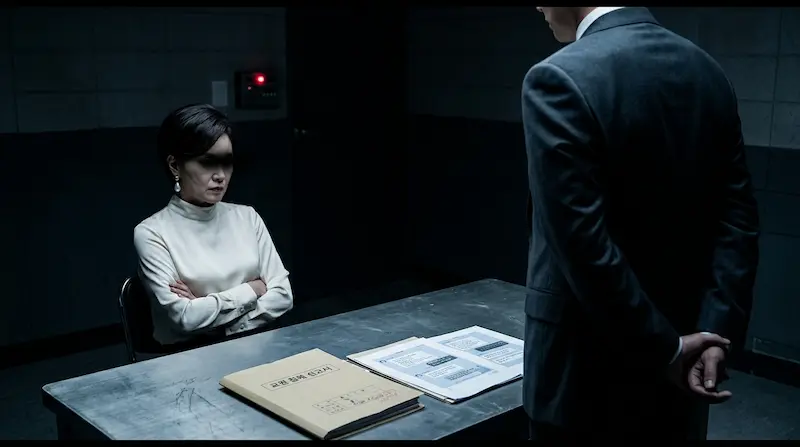
The webtoon version ends with Lee Ji-young breaking down, apologizing to Choi Ji-seon, and committing to change. The Netflix adaptation rejects this entirely. Instead, the bureau hands Lee Ji-young to the police on charges of teacher harassment, stalking, threatening behavior, and false reporting. She receives an actual prison sentence. When asked whether she has any remorse for what Choi Ji-seon’s parents must be feeling, Lee Ji-young snaps back: “Why would I care? My child is what matters.” That single line justifies the harsher ending. Korean audiences widely praised the change. After all, the post-Seoi Elementary movement has made it clear that the “they’ll learn from their mistake” framing no longer matches public sentiment.
Bong Geun-dae’s Mom-Cafe Counterstrike
Bong Geun-dae’s mom-cafe operation deserves its own mention. Korean parent communities, especially mom-cafes, function as informal but powerful social courts. By posting Lee Ji-young’s harassment record there, Bong Geun-dae bypasses traditional legal channels entirely. Her isolation from the parent community arrives before the legal sentence. International viewers may miss this layer. Nonetheless, Korean viewers immediately recognized the strategic genius of using the same social network that originally protected Lee Ji-young against her.
Episode 6 Opens — The Hyunjin Middle School Crisis
Min Ji-woong and the Four-Boy Crime Ring
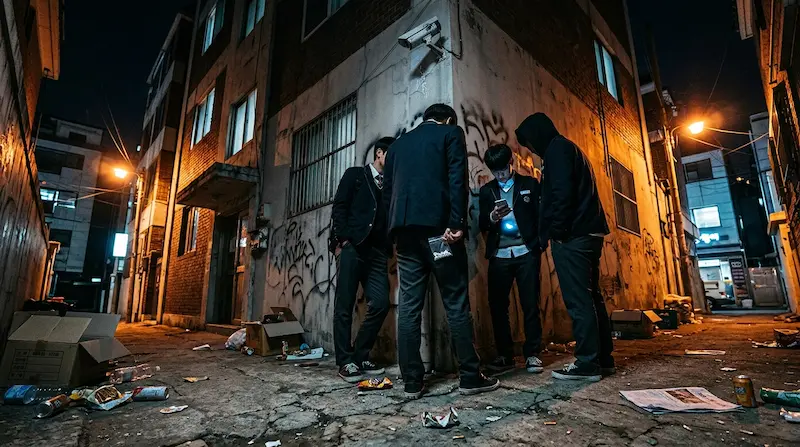
Episode 6 pivots to Hyunjin Middle School and a very different problem. Min Ji-woong, played by Jang Yo-hoon, leads a four-boy ring of juvenile delinquents who openly mock the bureau on day one. They ram the bureau’s vehicle, steal it, and set off fireworks during the chase. Even Na Hwa-jin’s Special Forces background can’t immediately contain them. Their confidence comes from a single legal fact. Specifically, Korean law treats criminal acts by minors under 14 as protected from standard criminal prosecution. They chant “촉법, 촉법” (juvenile, juvenile) like a battle cry.
Oh Yoon-jin — Diet Pills to Methamphetamine
The case opens fully when bureau officers find classmate Oh Yoon-jin, played by Kim Chae-eun, in critical condition. Min Ji-woong recruited Oh Yoon-jin by offering “diet pills” that turned out to be methamphetamine. Once addicted, Oh Yoon-jin became Min Ji-woong’s distribution channel inside the school. She reported the ring to police early on. However, all four boys walked free under juvenile protection. The retaliation that followed left Oh Yoon-jin convinced that ending her own life was the only escape route. Episode 6 handles this thread carefully. The show makes clear that Oh Yoon-jin is the victim of a system failure, not a willing participant.
“We Didn’t Know” — The Parents Who Hide Behind Their Children
When Adults Use Juvenile Status as a Shield
The parents of Min Ji-woong and his three accomplices deliver episode 6’s most damning line. Confronted with their sons’ crimes, one parent says: “They said they didn’t know. That’s why they’re juveniles. That’s why adults are supposed to protect them, right?” This line is the connective tissue between episodes 5 and 6. In episode 5, Lee Ji-young used her child to justify harassing a teacher. Meanwhile in episode 6, these parents use juvenile status to justify shielding their own criminal children. The vocabulary is different. However, the moral evasion is identical. Both episodes ask Korean society the same question. When does “I’m protecting my child” become “I’m protecting myself from accountability”?
Episode 6’s Boldest Move — Field Trip to Juvenile Prison
The Gimcheon Setting
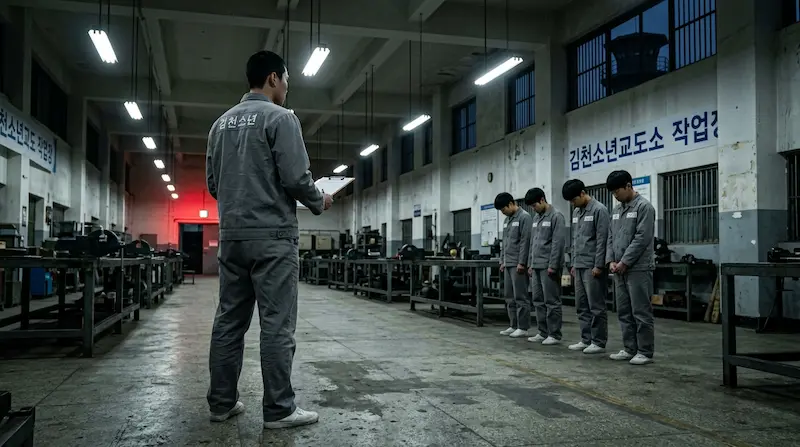
The bureau’s solution breaks new ground. Minister Choi Gang-seok authorizes a “field trip” to Gimcheon Juvenile Correctional Facility, where Min Ji-woong and his crew will experience the world they’re statistically headed toward. The episode films this sequence as a direct homage to The Shawshank Redemption. Long corridor shots, work-yard wide angles, and the slow institutional choreography all reference the 1994 film. Korean viewers caught the reference immediately. Furthermore, the production confirmed it in promotional interviews.
Kim Soo-gyeom, the Work-Leader Who Was Once a Victim
The episode’s emotional core arrives through Kim Soo-gyeom, played by Kim Gyun-ha. As the prison’s work-leader, he commands respect from older inmates and terrifies Min Ji-woong’s crew within minutes. His backstory delivers the gut punch. Kim Soo-gyeom was originally a school-bullying victim who eventually killed his tormentors and ended up in juvenile prison. His parting request to Na Hwa-jin reframes the entire bureau mission: “Please don’t let anyone end up like me — a victim who became a perpetrator.” This single line earned the episode its strongest critical response. The line also gives the bureau’s harsh tactics retroactive justification. Specifically, every case the bureau handles is an attempt to interrupt the victim-to-perpetrator cycle before it completes.
Real-World Issues Behind Episodes 5-6
Korea’s Juvenile Age Reform Debate (14 to 13)
Episode 6 lands during an ongoing Korean policy debate. The current juvenile age threshold is 14. However, a multi-year public consultation has been considering lowering it to 13. Supporters argue that 14-year-olds are already exploiting the age gap for serious crimes. Critics counter that lowering the threshold criminalizes children without solving the underlying social failures. The show takes no explicit position. Instead, episode 6 lets viewers watch Min Ji-woong weaponize the existing law, then lets Kim Soo-gyeom describe what happens after a few more years of escalation. The viewer is left to draw conclusions.
The Post-Seoi Elementary Teacher Protection Movement
Episode 5 lands inside a different but parallel reform debate. After the 2023 Seoi Elementary case, Korean teachers organized one of the largest professional protests in recent memory. The resulting reforms include stronger teacher rights protections, restrictions on parent contact outside school hours, and new legal definitions of “교권 침해” (teacher rights violation). The show’s fictional Education Protection Bureau is essentially a maximalist version of what the post-Seoi movement was demanding. Choi Ji-seon’s storyline reads less as fiction and more as a thought experiment about what teacher protection might look like if pushed to its logical extreme.
Choco Papa’s Take
What’s Working — The Adult Accountability Through-Line
After fifty-nine years and a career that took me through baseball locker rooms and corporate executive suites, I have watched countless adults hide behind some version of “I was only trying to help.” Episodes 5-6 nail this evasion with brutal precision. Lee Ji-young’s “my child is what matters” and the delinquent parents’ “they’re juveniles, you have to protect them” are the same sentence in different costumes. The drama’s decision to pair these two episodes back-to-back is its sharpest editorial choice yet. Specifically, episode 5 shows adults using children to attack other adults. Meanwhile, episode 6 shows adults using children to shield themselves from law. Both versions destroy the children involved. Furthermore, both versions only work because the surrounding society lets the evasion stand.
What’s Not Working — The Webtoon’s Softer Edges Are Missed
The drama’s harder ending in episode 5 is defensible. However, the complete elimination of Kim Seok-hyeon’s redemption arc costs the show something. The webtoon’s version had a husband who eventually understood what his wife had become and tried to course-correct. By contrast, the drama version makes him a pure enabler. As a result, the episode loses one nuance that mattered in the original. Specifically, the webtoon argued that complicit adults can sometimes wake up. Meanwhile, the drama argues they generally don’t. Both readings have merit. Nonetheless, the show’s chosen path leaves no room for the more hopeful interpretation.
Looking Ahead (Episodes 7-8 Preview)
Episode 7 returns the bureau to a new school context, with early reports suggesting an academic pressure storyline centered on Daechi-dong cram school culture. Episode 8 reportedly escalates the political resistance against the bureau, with opposition leader Hwang Gi-tae mobilizing parliamentary opposition. Additionally, the main-arc thread involving Choi Gang-seok’s deceased daughter Choi Ga-yoon should advance further. The next recap covers both episodes in full.
Final Thoughts on Teach You a Lesson Episodes 5-6
The Teach You a Lesson episodes 5-6 recap shows the series shifting from school-violence cases toward adult-accountability cases. Specifically, episode 5 attacks parent harassment and the social systems that enable it. Meanwhile, episode 6 attacks juvenile age exploitation and the parents who weaponize their children’s legal status. Both episodes refuse the easy redemption arc. Both episodes draw directly from real Korean social crises — the 2023 Seoi Elementary tragedy and the ongoing juvenile age reform debate. Furthermore, both episodes find their emotional center in characters who refuse to look away: Choi Ji-seon refusing to disappear quietly, Kim Soo-gyeom refusing to let the victim-to-perpetrator cycle continue. That focus on accountability is what makes the Teach You a Lesson episodes 5-6 hours land harder than the earlier cases.
For everything else about the series, see our complete guide, the episodes 3-4 recap, the episodes 1-2 recap, and the filming locations guide. For the official Netflix title page, visit Netflix. Additionally, the Dramabeans episode hangout collects international viewer reactions across the full ten-episode run.