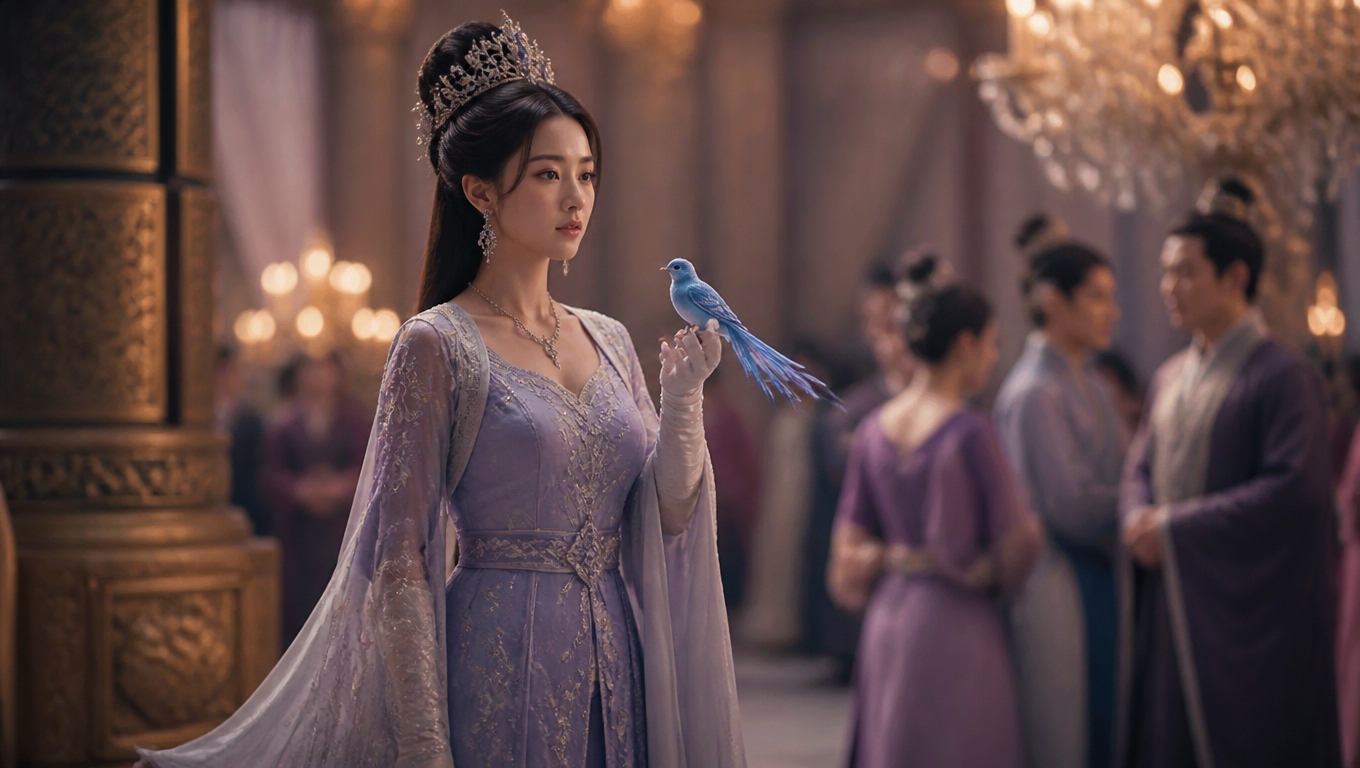
A perfect empress loses her throne to a runaway slave — and finds an anonymous pen pal who can turn into a bird.
Disney+’s biggest Korean drama swing of 2026 opens with a divorce notice. The Remarried Empress — the live-action adaptation of Alphatart’s record-breaking web novel and webtoon (nearly 3 billion cumulative views on Naver alone) — stars Shin Mina as Empress Navier, Joo Ji-hoon as Emperor Sovieshu, Lee Se-young as the runaway slave Rashta, and Lee Jong-seok as Prince Heinrey of the Western Kingdom. Disney+ released the first four episodes a day early on November 3 after the positive Busan International Film Festival response, and by the next morning the show sat at #1 on Disney+ Korea’s Top 10 chart. It then became the most-watched local original in Disney+ and Hulu history within its first three days.
But make no mistake: this show is also dividing viewers down the middle. Some call it the most gorgeous romantasy of the year; others say the emperor’s sudden change of heart makes no sense. Here’s everything that happens in episodes 1-4, plus why the ballroom waltz scene broke the internet — and where the criticism actually sticks.
Spoiler warning: full recap of episodes 1-4 below. If you haven’t watched yet, the first four episodes are streaming now on Disney+ (and Hulu in the US).
First, the release schedule (because everyone asks)
Disney+ did something unusual with this premiere: instead of the usual one-episode drop, it released episodes 1-4 all at once on November 3 — a day ahead of schedule — and now adds two new episodes every Wednesday:
November 3 — Episodes 1-4 (premiere drop)
November 11 — Episodes 5-6
November 18 — Episodes 7-8
November 25 — Episodes 9-10 (finale)
The four-episode premiere is smart for a recap-watcher: by the time the ballroom scene hit social media, there were four episodes of story behind it instead of one.
Episodes 1-2: “I finally felt my heart flutter”
The Eastern Empire is stable, prosperous and, by every outward measure, perfectly ruled by Emperor Sovieshu and Empress Navier. Married young, they’ve built a cordial, efficient partnership — the kind where respect replaced romance years ago. What they don’t have is an heir, and that single absence cracks everything open. While planning the empire’s New Year’s celebration, Sovieshu muses how wonderful it would be to announce a pregnancy in his speech. Navier’s silence is the only answer he gives him.

The real turning point comes on a royal hunting trip — and it nearly kills them both. Navier is attacked by a massive worm-beast and saved at the last second by a mysterious blue bird that guides her to the edge of the magical barrier. Sovieshu, meanwhile, stumbles onto slave hunters chasing a runaway slave girl — Rashta. In the confusion, the hunters attack what they assume are mere nobles, two of them die, and the emperor brings both the girl and the surviving hunter back to the palace for questioning.
From there, Sovieshu’s fascination with Rashta moves at a speed that feels less like romance and more like an ego trip. She’s everything Navier isn’t: helpless, adoring, and permanently in need of rescue. She calls herself in the third person. She’s never seen a palace. And crucially — unlike Navier, who is a better archer than him and has never once needed saving — she lets Sovieshu play the hero. It’s a textbook savior complex, and the show knows it.
He forces Rashta’s emancipation from her owner, Viscount Lotteshu, then brokers a deal with Lady Albani — his disgraced aunt, stripped of title and lands after her husband’s crime against the Crown — to adopt Rashta into nobility so she can legally become his mistress. The payment: restoring her family’s name. Remember this arrangement; it means Rashta’s position is a two-year contract, and everyone involved has an incentive to break it.
When Navier tests her husband by offering to take Rashta into her own household, he refuses — and eventually tells his wife that he “finally felt his heart flutter.” For a political marriage, that line lands like a slap. Navier doesn’t cry, doesn’t shout. She tells her panicking ladies-in-waiting to focus on the New Year’s celebration, because the Eastern Empire’s 100-year reputation is on the line. Then she goes to her private space and swallows her loneliness alone. It’s the first sign that Shin Mina’s Navier will be played with devastating restraint rather than melodrama.
Episode 3: “May I call you unnie?” — and the shove heard around the palace

Rashta’s palace education goes exactly as badly as you’d expect. She wanders rose gardens uninvited, speaks of herself like a child, and — in the scene webtoon readers have been waiting for — approaches Navier in the royal garden with the sweetest poison in the show: “May I call you unnie?” The war between the two women starts with that one sentence.
The escalation is quick and brutal. Rashta, believing the Emperor’s wife should be as charmed by her as he is, grabs Navier’s dress to stop her from walking away — a massive breach of etiquette and a public insult to the empress. Navier’s lady-in-waiting Laura shoves Rashta off and mutters the word “filthy.” Sovieshu witnesses the shove, misses the insult that caused it entirely, and sentences Laura to five days of confinement on bread and water.
It’s the smartest kind of scene-writing: the punishment itself is minor, but what it means is enormous. The emperor has publicly taken his mistress’s side over his empress, and every servant, noble and minister in the palace sees it. Gossip shifts. Loyalties shift. And two dangerous outsiders start moving: Lady Albani and her son Cherl — scheming to restore the family’s honor by pulling Navier down — while Viscount Lotteshu, now missing an eye, tracks news of Rashta’s rise from the gutter with a laugh.
Navier’s only escape is her letters. The blue bird from the hunt — which she names “Queen” — carries messages between her and an anonymous pen pal who writes with wit and warmth. What Navier doesn’t know: Queen is not a bird at all. He’s Prince Heinrey of the Western Kingdom, a shapeshifter who has been half in love with her since the day he saved her life. The bird itself became an instant talking point — designed with Heinrey’s own hair color and eyes, and convincing enough that Korean netizens crowned Lee Jong-seok with a new nickname: “Lee Jong-jae” (Lee Jong-seok + sae, bird). The actor leaned in at the production press conference: “I was born to play a bird.”
Episode 4: The blue rose, the waltz, and the cliffhanger

The New Year’s ball is a masterclass in public humiliation. Sovieshu opens the ball with a grand speech — one Navier wrote for him — then chooses Rashta, not his empress, as his first dance partner. Rashta hasn’t mastered the choreography, and it shows. Navier is left standing at the edge of the floor while foreign dignitaries titter behind their wine glasses. Lady Albani, watching from across the room, quietly stirs the gossip.
Then Heinrey does the most romantic thing in the drama so far. He plucks a blue rose from the arrangement, crosses the ballroom with every eye on him, drops to one knee, and asks Navier to dance. The scene became the show’s viral moment for good reason — the camera work on the clasped hands, the way Heinrey blocks Navier’s view of the stomping, sulking emperor, the sheer Bridgerton-meets-Pride & Prejudice language of it all. Where Sovieshu and Rashta’s dance was clumsy and unbalanced, Navier and Heinrey’s waltz is a conversation between equals — playful, charged, unmistakably matched.
Sovieshu watches with the hypocrisy of a man who wants his cake and Navier too. He claims the second dance — then uses it to lecture his wife that an affair with a prince would make her “his mistress,” not the other way around. The audacity is the point; the show wants your blood pressure up.
Rashta, drunk on her own importance, asks Heinrey for a dance and receives the coldest line of the episode: “I want to cherish the dance I shared with Her Majesty as my last for the day.” Her tears summon Sovieshu like a bell — he can’t miss a chance to play the hero — and Navier, abandoned on the dance floor a second time, retreats to her garden gazebo. There, Heinrey as Queen quietly comforts her, and their pen-pal game continues: he wagers “Queen” on their identity bet; she replies that she’s “a man,” careful to protect her identity.
Then the cliffhanger. Heinrey has McKenna spread the word that he’s searching for his anonymous pen pal. He hears she’s finally come forward, races through the palace to the lobby where a crowd has gathered to watch the prince meet his mystery correspondent. The woman standing there isn’t Navier.
It’s Rashta — claiming to be his pen pal in front of everyone, curtsying to applause, while Navier watches frozen from the doorway.

Here’s what softens the rage: Heinrey knows. He’s known from the start — he’s been delivering the letters himself. Which means the lobby scene isn’t a defeat for Navier; it’s a trap Rashta doesn’t know she’s walking into.

The three debates everyone is having about episodes 1-4
1. The acting: an easy pass, with one standout
Joo Ji-hoon plays Sovieshu with just enough shamelessness that viewers are openly furious at him — mission accomplished. Lee Se-young’s Rashta keeps ambition flickering under the innocence, and it’s her performance that keeps the villain from becoming a cartoon (mostly). Shin Mina plays Navier’s wounds through restraint: straight posture, level voice, one flicker of hurt at a time. And in the supporting cast, Jung Young-joo’s Lady Albani is the breakout — her musical-theater command of the “European aristocrat” register is so convincing viewers joked she’s a “career European noble.”
2. The look: gorgeous outdoors, questionable indoors
The production filmed on location in Europe — Germany’s Schleissheim Palace and the Czech Republic’s Kroměříž gardens among them — and every exterior shot delivers the Bridgerton-scale fantasy the premise promises. The gowns are another matter entirely: Shin Mina’s Western-style imperial dresses are universally praised, and her wardrobe alone is worth the watch for fashion-minded viewers. The criticism sticks to the interiors — some reviewers called the indoor sets “escape-room café” quality — and to odd color-grading choices that left Joo Ji-hoon looking pale in several scenes. Some outfits read slightly costume-party. Your mileage will vary.
3. The pacing: fast story, thin emotional logic
Four episodes cover Rashta’s entrance, the palace war, the Albani faction, and Heinrey’s arrival — there is not a single boring stretch. But that speed has a cost: Sovieshu falls for Rashta so abruptly that, as Korean reviewers pointed out, the relationship deepens before the audience understands why he threw away the empire’s most capable empress. IGN’s review made the same point from the other side — the first four episodes are “beautiful but lack narrative depth,” and Navier’s political stakes in staying empress remain fuzzy. The divorce at the center of the story works emotionally; it just doesn’t yet work politically. That’s the biggest question for the remaining six episodes: whether the show can make the empire itself feel worth fighting over.
Verdict: glossy, propulsive, and worth the hype — with one asterisk
Episodes 1-4 deliver exactly what the trailer promised: a satisfying revenge-romance setup with a villain you’ll love to hate, a second male lead who is somehow the actual lead, and the most gorgeous ballroom scene of the K-drama year. The webtoon-faithful pastel palette takes an hour to adjust to and then becomes the charm. The asterisk is the emotional logic — if Sovieshu’s betrayal stays a plot device instead of becoming a character study, the back half will struggle. Given how carefully the show has laid Rashta’s contract, Lady Albani’s debt and the heir problem, there’s plenty of raw material for it to get there.
Rating: 4/5 — worth watching for Shin Mina’s wardrobe, Lee Se-young’s slow-burn villainy, and the ballroom waltz alone.
If you’re new to the story: the original web novel runs free chapters on Naver Series (and the webtoon adds weekly side stories on Naver Webtoon). Reading order opinion from viewers who tried both: watch the drama first, then the webtoon — the reverse makes the drama feel like a summary.
Coming up: episodes 5-6 dropped November 11, 7-8 arrive on November 18, and the 10-episode finale lands November 25. Based on the webtoon, the divorce and remarriage everyone’s waiting for starts moving fast — expect the pressure on Navier to peak before the finale.
What did you think of episodes 1-4? Did Rashta’s pen pal steal make you scream — and do you buy Sovieshu’s change of heart, or does it feel rushed to you too? Drop a comment below.
Sources: Dramabeans episodes 1-4 recap, The Review Geek episode 4 recap, IGN’s The Remarried Empress premiere review, Disney+.
If you loved the royal politics here, our Perfect Crown Character Guide & Fan Theories covers another palace drama worth binging.
Looking for another completed drama to binge while waiting for episodes 7-8? Check out our My Royal Nemesis Complete Guide.
And if the ballroom scene made you curious about K-drama soundtracks, our 15 Best K-Drama OST Songs That Never Stop Trending is a good place to start.